
Table of Contents
When Peace Meant Numbness
There was a time in my life when I thought I knew what peace really means—but I had it all wrong.
Back then, peace meant nothingness.
Not stillness. Not reflection. Just… an empty void.
No stress. No responsibility. No expectations.
If I could wake up and have nothing to do, no one to answer to, and zero demands—I convinced myself that must be peace. No pressure. No noise. No weight on my shoulders.
I remember those days vividly. It was right after my divorce—a time when sadness wrapped around everything like fog. I didn’t want to think, didn’t want to feel. I wasn’t looking for healing. I was just looking for silence.
The quiet didn’t comfort me—it numbed me. And at the time, I couldn’t tell the difference. I told myself this is what peace really means. But it wasn’t.
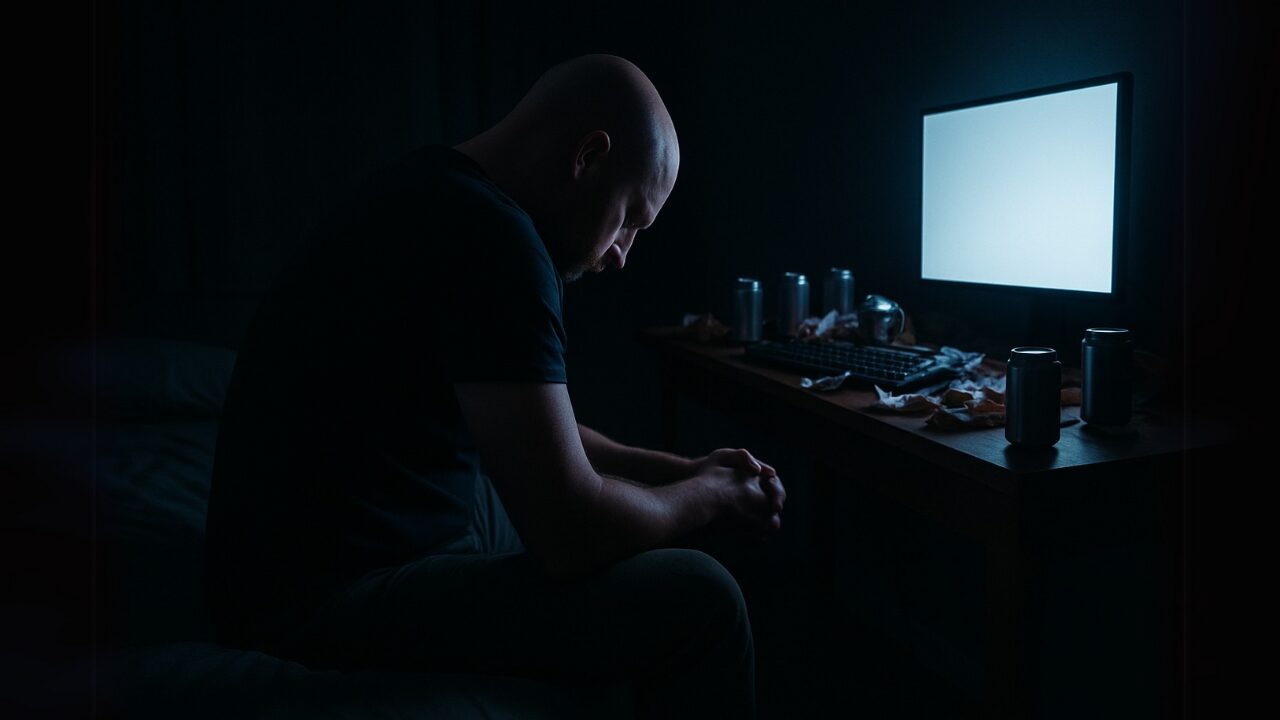
Every morning felt the same. I’d wake up not with anxiety about a packed schedule—but with dread because there was no schedule at all. No plans. No purpose. No one needing me. The only thing waiting for me was the ceiling fan above my bed and the thought of getting up just long enough to eat something and crawl back under the covers.
That wasn’t peace.
It was escape.
When Numbness Pretends to Be Peace
During that season, I thought I understood what peace really means. I thought it was the freedom to do absolutely nothing. But what I was really chasing wasn’t peace—it was numbness.
On my days off, I’d sleep until noon or later. No alarm. No direction. I’d drag myself to the kitchen, pour a soda, maybe eat some cereal straight from the box—whatever required the least amount of movement. If I had cigarettes, I’d light up, not out of enjoyment but just to pass time. Then I’d find my place in front of a screen and vanish.
World of Warcraft became my hiding place.
Ten hours. Twelve hours. Sometimes even sixteen.
Whole weekends would evaporate inside that glowing blue haze—questing, raiding, running from my own thoughts. Meals were optional and mostly junk food. Showers happened only when absolutely necessary. Bathroom breaks and snack runs were my only interruptions. I didn’t care about leveling up. I just didn’t want to exist in my real life.
It wasn’t joy.
It wasn’t rest.
It was disappearance.
And deep down, I knew it.
There was a hum of emptiness running through every day—just loud enough to be felt, never loud enough to interrupt. I hated how hollow I felt. I hated the fog I was living in. But I didn’t know how to leave it.
So I called it peace.
I convinced myself that maybe this is what peace really means—no pain, no pressure, no expectations. But it wasn’t peace. It was isolation dressed up as comfort. And the longer I stayed there, the harder it became to remember who I used to be.
When Peace Started to Feel Like Emptiness
There wasn’t some dramatic turning point.
No rock-bottom crash.
Just a slow erosion of who I was.
The wear on my soul didn’t scream—it whispered. It crept in quietly, day after day, until one night I sat in my computer chair, mouse in hand, heart pounding after yet another meaningless battle in a game that no longer distracted me. And I remember thinking:
I don’t recognize myself anymore.
I wasn’t building anything. I wasn’t becoming anything. I wasn’t showing up for the people I loved or the future I wanted. I was just… floating.
And that’s when I began to question what peace really means.
Because the stillness I once craved—the quiet I had mistaken for comfort—started to feel dangerous. I noticed something unsettling: when I had nothing to do, I didn’t feel free. I felt lost. Not “relaxed,” not “at ease.” Just unanchored.
The very thing I used to equate with peace was now beginning to feel like a void.
A weightless, directionless existence where the clock kept ticking but nothing ever changed.
I’d watch the world move on around me—friends progressing in their careers, people starting families, others sharing their wins—and I’d still be there, in the same chair, in the same dark room, doing the same empty routine.
And that’s when I finally admitted it:
Maybe this wasn’t peace at all.
Maybe what peace really means isn’t about silence or stillness.
Maybe peace isn’t the absence of noise, but the presence of purpose.
And that’s exactly what I was missing.
What Peace Really Means: It’s Not the Absence of Pressure—It’s the Presence of Purpose
That was the turning point.
Not a dramatic moment—but a quiet shift in what I was chasing.
I stopped chasing silence.
I stopped chasing nothingness.
And I started chasing direction.
That’s when I began to understand what peace really means.
It’s not about removing pressure. It’s not about checking out or disconnecting from responsibility.
It’s about walking with purpose—even in the midst of pressure.
Peace, I realized, isn’t something that shows up when life gets easy.
Peace shows up when your life is aligned.
I started asking different questions:
- Am I doing what God called me to do?
- Am I becoming the man He created me to be?
- Am I showing up for the people who matter most?
If I could answer “yes” to those questions—even with dirty dishes in the sink, even when I was tired, even when I didn’t feel like I had it all together—I felt peace.
That’s what peace really means.
It’s not surface calm.
It’s soul alignment.
It’s knowing you’re planted in the right soil—even if the weather’s rough.
Ironically, I still long for rest. But I’ve learned the kind of rest that actually restores me doesn’t come from checking out.
It comes from living with meaning.
With movement.
With mission.
I used to think an empty calendar meant peace.
But I’ve learned that an empty calendar often led to an empty heart.
Now, when I fill my days with purpose—prayer, presence, people—I don’t feel overwhelmed.
I feel rooted.
That quiet ache that used to hum beneath everything?
It started to fade—not because life got easier, but because life got clearer.
What Peace Means to Me Now
Today, peace comes from progress.
From knowing I’m walking in the right direction.
When I:
- Spend time in prayer or Scripture
- Show up with my wife and kids
- Follow through on the mission God’s given me
- Keep momentum on my health or finances
…that’s when I feel most at rest.
Not because life is easy.
But because it’s anchored.
There’s still part of me that wants to lay around and escape. That old version of peace still whispers sometimes.
But I’ve learned to be cautious with stillness.
Because when you’ve spent years using rest as a way to avoid responsibility, it’s easy to slip back into hiding and call it peace.
Now I know the difference.
Peace isn’t doing nothing.
It’s doing the right things—and trusting God with the results.
I want to go to sleep each night knowing I lived like it mattered.
I want to wake up each day knowing I’m walking with God—even if the path is steep.
I used to think peace was the absence of struggle.
Now I know it’s the presence of God in the middle of it.
That’s the kind of peace I’m building now.
Want a simple way to stay grounded—even when life feels heavy?
Grab the free 31-day Start Strong Check-In.
It’s a daily gut-check built for men who are ready to stop drifting and start living with direction.
- One personal insight
- One Scripture
- One challenge to apply it
- One quote to keep you grounded



0 Comments