

Table of Contents
I never set out to learn how to be a strong man emotionally. I wasn’t chasing inner peace or self-mastery. I was just trying not to be weak.
There’s a difference.
Weak got hurt. Weak got ignored. Weak got left behind. So I didn’t pursue strength to look impressive—I pursued it to survive. I was tired of flinching. Tired of standing there with no defense while life took swings at me.
And when I finally started to feel strength? It came in small, stubborn doses. A clenched fist. A wrestling mat. A uniform. A workout I didn’t think I could finish. I didn’t know who I was becoming yet, but I knew I wasn’t that scared little kid anymore. And that felt like progress.
What I didn’t see at the time was the trap: when you build discipline without direction, you don’t find freedom—you just become better at carrying pain. You get stronger, yes. But not softer. Not safer. Not more whole.
That’s the part no one tells you about how to be a strong man emotionally. Without healing, all that effort can become armor. And while armor protects, it also isolates.
This post isn’t about having it all figured out. It’s about the years I spent trying to become someone—anyone—other than who I used to be. It’s about what it costs to be tough, and what it takes to be whole.
It’s not the full story. But it’s where the fight began.
I talk more about that shift—from surviving to healing through faith—in this post on overcoming childhood trauma as a Christian man.
The First Time I Felt Strong as a Boy
I was in second grade the first time I remember feeling powerful. Not strong in a noble way—just… not weak.
There was a kid who lived along my walk home from school. A couple of times, he came out and sprayed me with a water gun. Harmless on the surface. But to me, already living in survival mode, it was more than just water. It felt like disrespect. Like being targeted. Like losing control.
So one day, I snapped. I waited for him. Chased him. Hit him. I don’t remember how many times or how hard. We were kids. But I remember the feeling: for once, I wasn’t the one shrinking. I wasn’t the one being cornered or mocked or dismissed. I was the one people were cautious around.
And honestly? That felt like safety.
It wasn’t real strength. It wasn’t courage. It was a reaction. But for a kid raised in instability, that moment was the closest thing I’d felt to control. And in a twisted way, that control felt like security.
Looking back, I don’t feel proud of it. I feel conflicted. Because even though I didn’t learn how to be a strong man emotionally that day, I did learn what it meant to feel less powerless. That mattered. And it shaped me in ways I didn’t understand until much later.
Real strength doesn’t come from overpowering others—it comes from healing what made you feel powerless in the first place. But at the time, all I knew was this: silence made me a target. Reaction made me feel strong. And I’d take whatever kind of strength I could get.
Wrestling Taught Me Discipline Before My Life Fell Apart
At the time, I didn’t know my world was about to fall apart.
My dad hadn’t robbed the flower shop yet. My brothers hadn’t been taken into foster care. I was still going to school, pretending life was normal—even though everything underneath felt like it could crack wide open. I couldn’t name the pressure, but I felt it. Every day.
That’s when I found wrestling.
It wasn’t some big, emotional moment. I didn’t go looking for healing. I just needed something to do. But almost immediately, wrestling gave me something I didn’t know I was missing: structure. Predictability. Boundaries. There were rules. Coaches. A mat with edges. For a kid living in chaos, that kind of consistency was rare—and it felt like relief.
Then life collapsed.
My dad went to jail. My family scattered. I got sent to live with my grandma. My brothers were placed into the system. Everything familiar was gone. But wrestling stayed. The practices, the matches, the discipline—it didn’t change. And that made it feel safe.
It didn’t fix me. It wasn’t therapy. But it became an outlet. And sometimes, learning how to be a strong man emotionally starts with having just one place in your life that doesn’t spin out of control. For me, that place was the wrestling mat.
It taught me how to channel my pain without becoming it. How to show up even when everything else felt unstable. And how to breathe through the fight instead of shutting down. That wasn’t strength in the way I’d imagined it. But it was a start.
When Pain Finally Had Rules
Before wrestling, pain felt unpredictable. It came out of nowhere—a slammed door, a sharp look, someone’s bad mood erupting into violence or threats. There were no boundaries. No explanations. Just the constant sense that anything, at any time, could hurt you. That kind of pain didn’t just wound you—it trained you to brace for it, expect it, and never trust calm.
Wrestling didn’t erase that history, but it introduced a new concept: pain with purpose.
On the mat, pain had structure. There were boundaries. A whistle blew to start and stop. Coaches watched. Your opponent was there to win, not to destroy you. You could push your limits and know where the edge was. And when it ended, you shook hands and walked away—respected, not humiliated.
That changed everything.
It was the first time pain didn’t feel like a threat. It felt like a challenge. Wrestling showed me that struggle didn’t always mean survival. Sometimes, it meant progress. And learning how to be a strong man emotionally meant learning the difference.
I started building endurance. Picking up technique. Wrestling up a weight class when the team needed it. Not to prove I was better than anyone—but because I was starting to believe I could hold my own.
For a kid who used to shrink under pressure, that mattered. I wasn’t just reacting anymore—I was responding. I was choosing.
Wrestling didn’t heal everything, but it gave me a preview of what healthy strength could look like: grounded, focused, not driven by fear. And when you’ve spent your life thinking strength means never getting hurt, that kind of shift is the beginning of real emotional maturity.
The Day I Learned Strength Has Limits
I didn’t know my appendix was about to rupture. I just knew something felt off.
It was a typical wrestling meet—two matches lined up—and I was already nursing a sharp pain in my side. But I kept quiet. I wasn’t the kind of kid to speak up. I’d been through worse, I told myself. Pain was familiar. Ignoring it was second nature.
So I did what I always did—pushed through.
The first match went fast. I took the guy down hard—maybe too hard—and pinned him. He lost his wind. I got the win. And more importantly, I got off the mat before the pain caught up to me.
But the second match? That’s when everything broke.
The moment my opponent pressed on my abdomen, I collapsed. My body gave out. He pinned me in seconds. It wasn’t just a loss—it was embarrassing. I sat there afterward, confused, ashamed, wondering what had just happened. I wasn’t the strongest guy on the team, but I was scrappy, smart. Losing like that didn’t make sense.
Then came the truth: my appendix had ruptured. I needed emergency surgery. The doctor told me it could’ve been fatal if I’d waited much longer. And suddenly, that loss didn’t feel so shameful anymore.
It taught me something I wouldn’t understand fully until years later: being a strong man emotionally isn’t just about endurance. It’s about awareness. You can be tough and still miss the signs your body—or your soul—is giving you. And sometimes the strongest thing you can do isn’t to power through—it’s to stop, speak up, and get help.
Real strength isn’t invincibility. It’s the wisdom to know when something’s wrong—and the courage to admit it.
How Physical Strength Changed My Identity as a Man
For most of my early life, I felt small. Not just physically—but emotionally. I didn’t take up space. I didn’t speak up. I stayed quiet, kept my head down, and did everything I could to avoid becoming a target. Because in the world I grew up in, visibility often meant danger.
But then my body started to change.
In middle school, I hit a growth spurt. My shoulders broadened. My voice dropped. I started building muscle from wrestling and bodyweight training. And little by little, the world started responding to me differently. People didn’t invade my space the same way. The teasing slowed down. Strangers gave me just a little more respect.
It wasn’t that I suddenly became confident—it’s that I stopped feeling so vulnerable.
I wasn’t chasing aesthetics. I didn’t care about abs or attention. What I cared about was not being helpless. Strength, even just physical strength, started to shift something deep inside me. It told me I wasn’t stuck as prey. I didn’t have to stay in that powerless role forever. And for a young man learning how to be a strong man emotionally, that shift mattered.
Muscle didn’t fix me. It didn’t heal the parts of me that were still afraid or shut down. But it cracked the door open. It made me curious about who I could become. It gave me a taste of what it felt like to carry myself differently—not because I was faking it, but because I actually felt different.
That confidence didn’t carry into every part of life—especially not outside the wrestling room. But it was a start. And later, in the military, that physical strength would be tested. And so would the emotional kind.
How Military Discipline Shapes Emotionally Strong Men
When I joined the military, I didn’t just get a job. I got something I never had growing up: structure. Purpose. A clear set of rules.
For a guy raised in chaos, that mattered more than I can explain. No more guessing how to stay safe. No more waiting for the next mood swing or outburst. The military gave me clarity: follow orders, and you’re good. Don’t, and there are consequences. It was discipline—but with direction. And for the first time, I felt like I belonged.
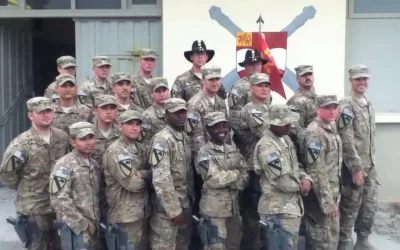
The physical side came naturally. I had already tasted discipline through wrestling and workouts, but this was different. Ruck marches, weapons drills, obstacle courses, sleep deprivation—it stretched me. Broke me down. Built me back up. And I liked it. There was pride in doing what most people wouldn’t. Pride in pushing through and proving I could handle it.
But here’s the thing most people don’t talk about: that kind of strength doesn’t always teach you how to be a strong man emotionally.
The mission gave my suffering meaning. I wasn’t just grinding to escape my past—I was serving something bigger. That mattered. But it also gave me a mask. Strength wasn’t optional—it was expected. Falling apart wasn’t allowed. So I didn’t.
Looking back now, I realize I was still running. Not toward a purpose, but away from the pain I hadn’t dealt with. I thought performance would equal peace. That being sharp, useful, and put-together would finally make me feel whole.
But emotional strength doesn’t come from hiding behind a title. It starts with facing what you’ve been avoiding—and letting yourself be seen, even when it’s uncomfortable.
Fear Behind the Strength: What Emotionally Strong Men Hide
From the outside, I looked like a strong man. Military uniform. Rank. Routine. Discipline. But underneath all that? Fear.
Not the kind that comes with war stories. Not bullets or bombs. This fear was older. Deeper. It had nothing to do with the battlefield and everything to do with a childhood spent bracing for the next outburst, the next slammed door, the next moment of being made to feel small.
That’s why I trained so hard. Not because I was at peace—but because I was terrified of being powerless again.
I didn’t know how to be a strong man emotionally. I only knew how to build walls. I pushed harder. Got louder. Stayed later. If I could be the strongest, calmest, most capable guy in the room, maybe I could avoid the shame. Maybe no one would see the cracks underneath. Maybe I could finally feel in control.
I didn’t call it fear back then. I called it motivation. Drive. Discipline. But the truth? It wasn’t healing—it was hiding. It wasn’t wholeness—it was performance. I wasn’t chasing peace. I was just trying to stay one step ahead of the pain.
And there was no finish line. No deep breath. Just momentum—constant, exhausting, unrelenting. The uniform made it look noble, but inside, I was still a scared kid trying not to break.
Real strength isn’t found in how much you can carry. It’s found in finally asking: What am I carrying all this for?
Looking Strong, Feeling Numb: A Hidden Struggle for Men
On the surface, I looked like I had it all together. Disciplined. Focused. Stoic. The kind of man who could stay calm in chaos and get the job done without flinching. In the military, that made me dependable. In life, it made me look strong.
But I didn’t feel strong. I felt hollow.
Sure, I could pass a PT test, shoot expert, lead under pressure—but I couldn’t sit with my own thoughts without getting restless. I couldn’t explain why I felt so numb around things that were supposed to matter. I knew how to follow orders and push through pain. But ask me to explain what I was feeling inside? I had nothing.
That’s the hidden battle no one talks about. You can look like a warrior and still feel like you’re barely holding it together. People admire your composure, not realizing it’s just a mask—a controlled shutdown designed to survive, not connect.
If you’ve ever wondered how to be a strong man emotionally, this is where it starts: with honesty. Not about what you can do—but about how you’re actually doing. Because real strength isn’t the absence of struggle. It’s the willingness to stop pretending you don’t have any.
I kept playing the role. I let people believe the image because it seemed to help them. And for a while, I believed it helped me too. But deep down, I knew the truth.
I didn’t feel strong. I felt like one bad day away from breaking.
When Discipline Slips: Why Strong Men Struggle at Home
Discipline came easy during deployments. The structure was already there—PT at sunrise, meals on schedule, minimal distractions. I had one job: complete the mission. And in that environment, I thrived. I lifted hard, ran fast, stayed sharp. Everything around me reinforced the version of myself I wanted to be—strong, focused, dependable.
But then I came home.
And everything that made discipline automatic disappeared. No more strict routines. Just late nights, early mornings, unplanned meals, and real-life stress. The chaos I thought I had outrun came creeping back in. I kept promising myself I’d stick to the plan, wake up early, hit the gym. But slowly, it all slipped. And when it did, it didn’t just hit my body—it hit my identity.
I wasn’t just losing muscle or gaining weight. I was losing the man I thought I’d become.
See, I had built my worth around being the guy who never cracked. The guy who always showed up. So when I started to feel soft—physically or emotionally—it felt like failure. It felt like weakness was catching up again. And I didn’t know how to be a strong man emotionally if I wasn’t performing at full capacity.
I couldn’t admit I was tired. I couldn’t say I was struggling. I just kept pushing, kept telling myself to do better. But eventually, I had to face the truth: I wasn’t training to grow. I was still running—from shame, from fear, from the version of me I swore I’d never become again.
And that kind of motivation doesn’t last. It burns you out from the inside.
The Warrior I Couldn’t See in the Mirror
I’ve felt like a warrior for most of my life—not because I wanted to fight, but because I never really had a choice. I fought my past. I fought my thoughts. I fought to stay upright in situations that would’ve broken most people. Six deployments. A chaotic childhood. More loss than I ever let on. Deep down, I knew I was tough.
But the mirror didn’t always agree.
There were long stretches when discipline faded and life caught up with me. I’d see softness in the reflection—physically, yes, but also emotionally. I didn’t look like a warrior. I looked tired. Disconnected. Like a man who had stopped pushing, even though the fight was still happening inside.
And that dissonance rattled me.
I wasn’t lazy. I wasn’t weak. But I didn’t recognize myself. And if I couldn’t even see the fighter I believed I was, how could I show up with strength for anyone else?
Eventually, I stopped trying to prove I was strong and started learning how to be a strong man emotionally—by living in alignment. I wanted my outer life to reflect the resilience I had earned. So I made the decision to change. Not all at once, and not perfectly. Just small choices, repeated. Tighter standards. A better relationship with failure. I dropped 70 pounds, not by chasing an image—but by honoring a truth.
This wasn’t about vanity. It was about congruence. About finally living in a body, and a mindset, that matched who I was becoming.
I wasn’t just surviving anymore. I was becoming the man I knew God made me to be.
How Strength Became a Mindset
For most of my life, I measured strength in numbers—how much weight I could lift, how far I could run, how long I could stay in the fight without flinching. Strength was physical. Tangible. Obvious.
But over time, that definition started to crack.
I began to see that physical strength didn’t mean emotional wholeness. You can look strong on the outside and still live in fear. You can win battles in the gym and still be losing the war in your own mind. That hit me hardest in the quiet moments—when I avoided hard conversations, numbed out during connection, or kept even the people I loved at a distance.
That’s when I started to understand what no one had taught me growing up: learning how to be a strong man emotionally is a completely different fight.
I will give you a new heart and put a new spirit in you; I will remove from you your heart of stone and give you a heart of flesh. (Ezekiel 36:26)
The men I began to respect most weren’t just disciplined or tough—they were present. They knew how to feel without being ruled by their emotions. They could be soft without being weak. They could stay open without falling apart. And I realized… I wasn’t strong like that. I had trained my body, but I had neglected my heart.
That’s when the shift began.
Strength became less about what I could carry physically and more about what I could carry emotionally. Could I hold space for my wife when she needed connection? Could I be gentle with my kids when they needed guidance, not correction? Could I stay grounded in faith instead of white-knuckling control?
This is the part of manhood we don’t talk about enough. The part where being a strong man emotionally means learning to stop running—spiritually, relationally, and mentally—when things get hard.
That’s the muscle I’m learning to train now.
Faith Was the Strength I Was Missing
For most of my life, I believed strength meant never stopping. Push harder. Stay stoic. Don’t break—especially not in front of anyone. That mindset got me through a lot. It helped me survive war zones, trauma, and personal chaos. But eventually, I had to face the truth: survival wasn’t the same as healing. And discipline—on its own—wasn’t enough.
Because even at my strongest, I was still afraid. Still hiding. Still performing strength instead of truly living it.
That’s when the cracks started to show. The routines stopped working. The pressure started to crush instead of motivate. And in those moments of silence—alone, stripped of the titles and toughness—I realized I had built my identity around being strong without ever learning how to be a strong man emotionally.
I had always believed in God. But for a long time, it was distant—head knowledge, not heart trust. My logic, my doubts, and my past pain kept me guarded. I didn’t want to rely on anything I couldn’t control.
But slowly, I began to see the truth: God wasn’t asking me to blindly believe. He wasn’t demanding perfection. He was offering presence. Strength. Grace. He had been in the fight all along—I just didn’t recognize it. That relentless drive I thought came from grit? It was grace in disguise. That quiet nudge to keep going? It was Him.
When I finally stopped trying to be unbreakable and let God into the places I was still hiding, I found something better than toughness—I found peace.
Learning how to be a strong man emotionally meant letting go of the pressure to prove myself. It meant standing, not just on willpower, but on faith. And that kind of strength? It lasts.
I’m Not Trying to Be Hard to Kill Anymore
There was a time when everything I did—every workout, every ruck, every 2AM run—was fueled by one mission: don’t be vulnerable. I didn’t want to be touched, exposed, or hurt again. So I trained to be hard to kill. Not just on the outside, but inside too.
But what I called strength was really fear with a uniform. I wasn’t chasing health—I was chasing control. I believed that if I got strong enough, disciplined enough, detached enough, no one could ever reach the soft places in me again. The problem was, I couldn’t reach them either.
I didn’t realize how far I’d drifted from myself. From connection. From joy. I was a warrior without a war, still fighting ghosts with every drop of sweat.
These days, I train for something else.
I don’t want to be untouchable. I want to be a strong man emotionally—present, peaceful, and whole. I want to laugh with my kids and not feel like a stranger in my own body. I want to love deeply, forgive quickly, and stay grounded even when life gets chaotic. I want strength that can stand still—not just power that can push through.
The scared kid I used to be? I’m not trying to crush him anymore. I’m bringing him with me. I’m showing him that the fight is over—and we’re safe now. That real strength doesn’t come from running harder. It comes from staying. Feeling. Healing.
I’m still training. But not to be hard to kill. I’m training to live.
If this hit home, don’t just scroll past it.
You’re not weak for feeling numb. You’re not broken beyond repair. You’re a man who’s survived a lot—and that means you have the strength to heal.
👉 Subscribe to my blog for more real talk on faith, healing, and becoming the man God created you to be.
Or check out this post on survival mode—it might help you name what you’ve been carrying.


0 Comments