
Table of Contents
The Day That Still Haunts Me
If you’re looking for healing from an abusive father, I want to start by telling you what happened to me.
I was only two or three years old, but the memory is sharp. We lived in South Carolina, I think. My mom was with a man who wasn’t my biological father—he was my first stepdad, and the father of my middle brother. I don’t know how long he was in our lives, but the damage he left behind never really had a time limit.
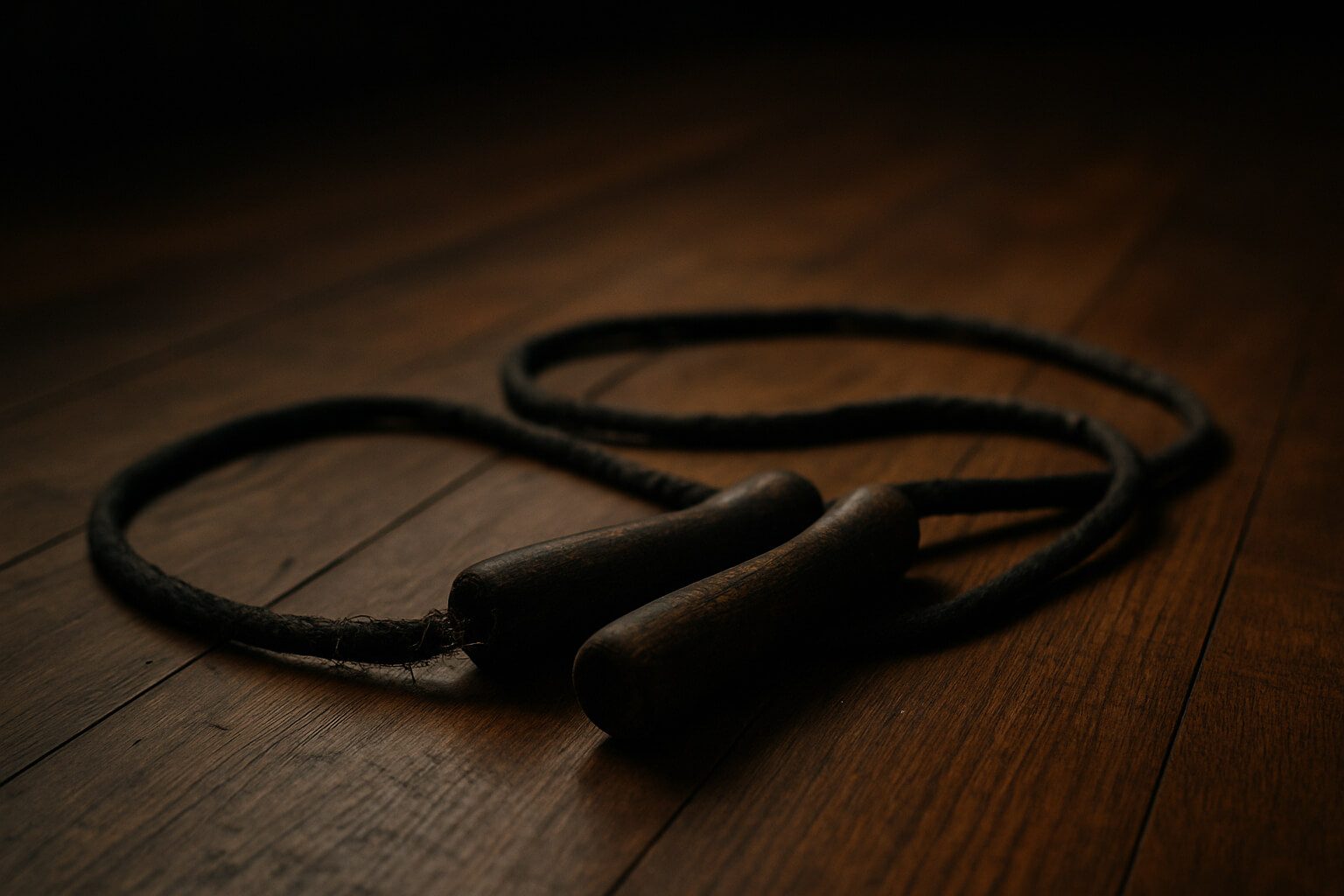
That night, the house was dark except for the glow of the TV. He was watching sports, and I was doing what kids do—playing. I had a jump rope and was pretending there was a dog on the end of it, like a leash. That annoyed him. He told me to stop, told me it wasn’t what boys were supposed to do.
I remember walking down the hallway to put the jump rope away, but I didn’t stop pretending. I was still playing, still using my imagination—still being a kid. That’s when he came after me.
Next thing I knew, I was on my back. He was on top of me, choking me with the jump rope.
I don’t remember how long it lasted, or exactly what he said in the moment. But afterward, he dragged me into the bathroom, held me up to the mirror, and showed me the rope marks on my neck. He told me this is what happens when I act like a little girl, like a bitch. Like a pussy. Over and over.
That’s where the memory cuts off. But the echo of it didn’t.
When a Kid Learns It’s Safer to Blame Himself
At that age, you don’t understand power dynamics. You don’t think in terms of abuse or trauma or dysfunction. You just know someone older and bigger got angry—and it must’ve been your fault.
I didn’t have the language for it then, but the lesson that got planted that night was this: you’re the problem.
It’s strange how something so clearly wrong can still make you feel like you’re the one who did something bad. But that’s what happens to a lot of kids who go through these kinds of moments. When you’re that small and someone who’s supposed to protect you turns on you, your brain does something to survive it—it rewrites the story. Instead of seeing them as dangerous, you start seeing yourself as defective.
Many men seeking healing from an abusive father don’t even realize they still blame themselves for what was done to them.
You carry it in small ways. You second-guess your tone. You feel the need to prove you’re not soft. You hesitate to speak up when something doesn’t feel right. It’s like your default setting gets calibrated to silence, because silence kept you safe.
And even now, I can logically say I didn’t deserve it—I didn’t do anything wrong. But that feeling? That old belief that I was somehow “off”? It lingered for years. Maybe it still does, quietly in the background. It’s not loud. It doesn’t yell. But it’s shaped more than I realized.
The Conversation With My Mom That Came Too Late
It wasn’t until high school—maybe my junior year—that I told my mom what happened.
I didn’t plan it. I don’t even remember what led up to the moment. But I shared the memory. I told her about the jump rope, the choking, the bathroom mirror, the words he said.
She was shocked. I think the first thing she said was that she was surprised I even remembered it, because I had been so young—two or three, she thought. But then something changed in her face. She got quiet and said, “You know… I always wondered.”
She told me that she had seen the marks on my neck that day. And when she asked him about it, he told her I’d fallen off the bed and gotten tangled in the rope. She understandably didn’t press it. And over time, she must’ve convinced herself it was the truth.
She apologized. She was emotional. I know it hurt her. I could see that she meant it.
Still, there’s a part of me that wishes someone would’ve done something then. I wish it hadn’t been swept under the rug. I wish that environment hadn’t lasted as long as it did. She should’ve left him sooner.
But I’ve never blamed her. I really haven’t. I believe she was doing the best she could. And even though it wasn’t enough, I know she carried her own pain too. She wasn’t left out of the abuse. I have memory of how she was treated too. It was a scary environment.
Healing from an abusive father sometimes means forgiving people who didn’t act—but also didn’t know how.
She’s gone now, and I don’t carry bitterness toward her. She wasn’t the one who hurt me. But her silence is part of the story too. And part of the healing has been learning to hold that tension without letting it harden my heart.
Healing From An Abusive Father And Redefining Masculinity
I’ve never really cared for sports.
That might sound small, even trivial—but growing up, it never felt that way. I always felt a little off, like there was this invisible standard I was supposed to live up to as a man, and I just didn’t check the right boxes.
I wasn’t into football. I didn’t know the teams. I didn’t feel competitive in the ways most guys around me did. And for years, I thought something was wrong with me for that.
It’s only now, looking back, that I realize how much that moment with the jump rope shaped all of this. That wasn’t just a man getting mad. It was a man trying to define what masculinity should look like—and punishing me for not fitting his version of it.
So I learned to doubt my instincts. I learned that playfulness was dangerous. I learned that imagination could make you a target. And over time, I started to believe that I didn’t measure up.
Even now, sometimes when someone says “This is just what guys do,” that memory flickers. It’s not front and center, but it’s in there somewhere—whispering, You’re not man enough.
Healing from an abusive father and redefining masculinity has meant letting go of all those false metrics. God’s not holding up a playbook of touchdowns and testosterone. He’s looking for humility, strength, gentleness, courage, self-control.
It took me a long time to realize this: being a man isn’t about fitting in with men. It’s about being faithful to the Man who made you.
My Greatest Fear: Becoming the Same Kind of Man
I think one of the fears that’s followed me the longest is the fear that I might turn into him.
That I’d get angry one day and snap. That I’d yell the wrong way, or grab the wrong way, or discipline out of frustration instead of love. That some part of what was done to me might still be inside me—waiting to repeat itself.
Marriage will bring those fears to the surface. Fatherhood? Even more. It’s one thing to say you’re not going to be like him. It’s another thing to face your own stress, fatigue, and weakness and still hold that line when it’s hardest.
But here’s what I’ve learned:
Real strength isn’t about pretending those fears aren’t there. It’s about fighting them every single day—and refusing to pass them on.
A lot of men pursuing healing from an abusive father are terrified they’ll become the same kind of man. But that fear, when surrendered to God, can actually become fuel. Fuel to love better. To pause when you want to react. To ask for help when you feel yourself slipping.
I’ve been married 16 years now. I’ve got two teenagers. And I haven’t hurt them the way I was hurt. That doesn’t mean I’m perfect. But it does mean the cycle is breaking. And that matters more than I can say.
The Friend Who Shared His Name—But Not His Nature
Years later, in the military, I became close with a guy who had the exact same name as my abuser.
You’d think that would trigger something. But it didn’t—not in the way you might expect. He couldn’t have been more different. We came from opposite worlds—me from the South, him from up North. Different races. Different upbringings. Even different faiths. But somehow, we just clicked. We could relate in ways others couldn’t understand because parts of our stories were the same.
He was the kind of guy who didn’t need you to be anything other than who you were. No expectations, no posturing. Just real friendship. He’s actually the one who got me into poker—a game that became a tradition in my family. Now my wife plays. My kids play. My brothers and in-laws, too. It’s strange how something so small, like a shared hobby, can ripple through your whole life.
We don’t really talk much these days, but his presence in that chapter of my life helped rewrite something. That name doesn’t sting anymore. I don’t flinch when I hear it. In fact, it brings better memories to mind now.
Relationships like that are a part of how we heal, even if we don’t call it healing from an abusive father at the time. Sometimes healing sneaks in sideways—through laughter, trust, brotherhood, or just being seen by someone who doesn’t ask you to prove anything.
Why I Gave My Son the Same Name as My Abuser
This may be the most unexpected part of my healing from an abusive father…
I named my son after the man who hurt me.
Not because I wanted to honor him. Not because I forgot what he did. But because I was tired of giving that man power over how I felt when I heard that name.
That name was a trigger for a long time. It brought up fear, shame, confusion. But over time, God started to redeem it in small ways. First, through my friend in the military. That friendship gave the name a new association—trust, laughter, brotherhood.
And then my son came along.
We weren’t thinking about the abuser when we chose the name. We were thinking about our child. Our legacy. Our future. But deep down, part of me also wanted to take that name back. To say, This name doesn’t belong to that man anymore. It belongs to my boy.
Now when I hear it, I think of my son’s laugh. His eyes. The way he loves his mom. The way he surprises me with his compassion. That name doesn’t bring back darkness anymore. It brings light.
It’s not denial. It’s redemption.
I had to decide that one man’s violence wouldn’t get the final word on who I am, how I parent, or what that name means to me. God is in the business of making all things new—and that includes names, memories, and the legacies we leave behind.
Redemption Is More Than Forgiveness—It’s Rewriting Memory
There was a time I thought healing meant forgetting. That the goal was to move on, wipe the slate clean, and just stop thinking about it.
But that’s not what God does.
He doesn’t erase the past—He transforms it. He takes the worst parts of our story and uses them to grow something new. Not in a shallow, silver-lining kind of way—but in a deep, soul-level restoration that only He can do.
That’s what’s been happening to me.
The jump rope. The mirror. The names I was called. They haven’t disappeared. But they don’t hold the same power anymore. I can talk about them now without feeling like I’m back in that moment. I can see how God has taken that pain and used it to shape how I father, how I speak, how I empathize with others who’ve been hurt.
True healing from an abusive father goes beyond forgiveness—it reclaims the narrative.
It doesn’t say “That didn’t matter.” It says, “That won’t define me.” It doesn’t mean you stop remembering. It means the memory starts pointing to God’s goodness instead of someone else’s cruelty.
That’s what redemption is: not pretending it never happened, but letting God write a better ending than the one you were given.
What Healing From An Abusive Father Taught Me About Fatherhood
When you’ve been hurt by a father figure, it warps your definition of strength. For a long time, I thought strength looked like control. Like volume. Like dominance. But none of that feels strong when you’re on the receiving end of it.
What God’s taught me is that real strength looks like restraint. Like patience. Like choosing not to react in anger, even when every nerve in your body wants to lash out.
Fatherhood isn’t about being the biggest presence in the room—it’s about being the safest. It’s about making sure your kids don’t ever have to wonder if love and fear come in the same package.
That doesn’t come naturally to me. I’m not naturally nurturing. I’m not emotionally expressive. But my faith has slowly reshaped me—not just in what I do, but in how I see myself.
God doesn’t just change your habits. He changes your identity.
I’m not trying to parent perfectly. I’m trying to parent faithfully. I want my kids to see someone who’s still learning, still growing, still fighting to be better. I want them to feel peace when they hear my voice, not panic.
That’s what healing from an abusive father taught me about fatherhood:
That it’s not about breaking the rules—it’s about breaking the cycle.
You Can’t Erase the Past—But God Can Heal the Power It Holds
I still remember everything.
The sound of the TV in the dark room. The snap of the jump rope. The pressure on my throat. The mirror. The names he called me.
I remember it all. And I probably always will.
But here’s what’s changed: it doesn’t define me anymore.
It shaped me—but it doesn’t own me. It wounded me—but it doesn’t speak for me. That memory isn’t the headline of my life. It’s just one paragraph in a much longer story.
God didn’t erase the pain. He didn’t pretend it didn’t happen. He didn’t hand me an answer that made it all make sense. What He did was much deeper than that.
He absorbed it.
He took all that sorrow and shame, and pulled it into Himself. He started rewriting the meaning of those moments—not by changing the facts, but by changing me.
That’s the same thing I see in the book of Job. Job wanted answers. He begged for them. But instead of giving a list of reasons, God gave Job something better: Himself. His presence. His power. His assurance that even the worst pain is not without purpose.
I don’t have all the answers.
But I know healing from an abusive father is possible—because I’m living it.
And if He can use my scars to help someone else feel seen, known, and not alone—then that pain didn’t win. God did.
Bonus: A Free Resource for Men Who Refuse to Quit
If anything in this post hit home—if you’re walking through your own version of this pain—you don’t have to figure it all out today. But you do need to keep walking.
Healing isn’t about one big breakthrough. It’s about showing up again. And again. And again.
That’s why I created a simple resource called Start Strong. It’s a short, powerful devotional designed for men like you—men who are carrying scars but still showing up, still trying, still refusing to quit.
If you’re looking for daily consistency, this free devotional was made for men who are serious about healing from an abusive father, trauma, or just spiritual passivity. You’ll get short scripture reflections, direct encouragement, and space to reset your focus—one day at a time.
👉 Download Start Strong for Free Here
This isn’t a formula. It’s a reset. A tool. A step.
Because sometimes the best way to heal is just to start.

0 Comments