
Table of Contents
It’s Not About Your Teeth
There was a time in my life when I didn’t brush my teeth every day.
I know how that sounds—gross, lazy, maybe even embarrassing. But I’m not saying it to shock you. I’m saying it because it’s true. Back then, that kind of basic routine wasn’t part of my world. I didn’t grow up in a house where structure ruled the day. Hygiene wasn’t a priority—it was survival. And when survival is the focus, even the simplest habits feel optional.
For years, brushing was hit or miss. If I remembered, great. If I felt like it, even better. But I wasn’t committed to it, and I definitely didn’t see it as meaningful. It was just one more thing I did (or didn’t) do.
Now, I brush every day. No alarm, no tracking app, no streak to maintain. It’s not a goal anymore—it’s a given.
And looking back, I realize that shift meant more than I could’ve guessed. Because this story? It’s not about dental care. It’s about the unseen battle underneath. About what happens when you stop chasing motivation and start building habits that stick.
What started as a tiny act of hygiene turned into a foundation for something bigger—something internal. I started becoming the kind of man who followed through. Not for applause. Not for perfection. But because I needed to know I could keep a promise to myself.
If you’ve ever struggled to stay consistent…
If you’ve ever been tired of starting over…
If you’ve ever wondered why you keep giving up on the very things you say matter most…
This is for you.
Because real transformation doesn’t come from doing something epic. It comes from starting small, showing up daily, and slowly becoming someone new through habits that stick.
And yeah—it starts with a toothbrush. But this isn’t about your teeth.
What One Small Habit Taught Me About Habits That Stick
When I say I didn’t brush my teeth every day, it wasn’t because I was rebelling against good parenting or ignoring everything I’d been taught. The truth is—I was never really taught. My childhood was built on survival, not structure. When survival is your baseline, there’s no space left for routine. Consistency becomes a luxury.
My mom had a full set of dentures before she turned thirty. That tells you something. In our house, dental hygiene wasn’t just overlooked—it didn’t exist. Nobody talked about flossing. Nobody modeled daily routines. I wasn’t shown how to care for myself in the small, ordinary ways that build a sense of self-respect. We weren’t building habits that stick—we were just trying to get through the day.
So brushing my teeth? That became random. Something I might do before a date, or if I caught a whiff of my own breath and cringed. But it wasn’t a habit. It definitely wasn’t a discipline.
And that’s why, later, it mattered so much.
Because when I finally made the decision to do it every day—every single day, no matter what—it was about more than hygiene. It was a declaration. A quiet rebellion against the chaos I came from. Against the version of me that never followed through. Against the lie that said, “You’ll always be this way.”
Starting that habit was the first time I realized I could rewrite the script. That I could build something new from the ground up. And that maybe, just maybe, I could become the kind of man who didn’t just hope for change—but built habits that stick, even if nobody else had ever shown me how.
The Deployment Wake-Up Call
The turning point didn’t come during some self-improvement challenge or a fresh New Year’s resolution. It came in the middle of a deployment.
I was in Afghanistan—living in the kind of conditions that force you to take inventory of what matters and what doesn’t—when I noticed it. A small hole in one of my front teeth. A ledge where there used to be smooth enamel. I ran my tongue across it again and again, not wanting to believe what I felt. But there it was: visible, tangible proof that the years of neglect had finally caught up with me.
I’d been living like the alcohol I was drinking was somehow cleaning my mouth, and the menthol cigarettes I was smoking were keeping it fresh. Deep down, I knew better. But I didn’t care—or at least, I pretended not to. I numbed the reality because facing it meant confronting more than just bad breath. It meant admitting I wasn’t taking care of myself at all.
That rough edge in my teeth wasn’t just about enamel—it was about erosion. Of health. Of self-respect. Of the belief that I could be a man who made habits that stick.
When I got home from that deployment, I went to the dentist. He patched the tooth with a filling and tried to match the color—but the truth showed through. My teeth were stained from years of abuse, and that one “fix” just drew more attention to the problem. He told me if I ever wanted to whiten my teeth, the filling wouldn’t change color. The scar would stay—even if everything else looked new.
That stuck with me.
Because it wasn’t just about my teeth.
It was a picture of life. How we try to patch over the places where we’ve let things fall apart. How we focus on appearances instead of doing the deeper work of building real, lasting change. Of choosing habits that stick instead of quick cover-ups that fade fast.
That deployment didn’t just wake me up to dental health. It woke me up to how easily I’d been fooling myself.
Why This One Habit Was Different
I wasn’t trying to be a better man. Not at first. I was just trying not to fall apart.
Life felt chaotic back then—inside and out. I didn’t have a blueprint for discipline or structure. I had survival instincts. And when everything around you feels like it’s shifting or burning down, the idea of building anything—especially something small like a habit—feels laughable.
But brushing my teeth became something different.
It wasn’t about appearances. It wasn’t about hygiene. It was rebellion. A quiet, stubborn act of defiance against the version of myself that didn’t care. Against the excuses. Against the story I’d repeated in my head for years: that I wasn’t the kind of guy who could make habits that stick.
It was small—but it was mine. I could control it.
And yeah, part of me felt embarrassed by that. Who celebrates brushing their teeth? Who feels proud for doing something most people figure out in kindergarten? But shame has a way of keeping you stuck. It whispers that small wins don’t matter. That you don’t matter.
But I knew better. Deep down, I knew that if I could keep this one promise—if I could prove to myself that I could show up for something basic—I could build from there. Maybe not right away. Maybe not perfectly. But consistently.
Because consistency, not perfection, is what builds habits that stick.
And that’s where it all started. Not with a grand plan. Not with some life overhaul.
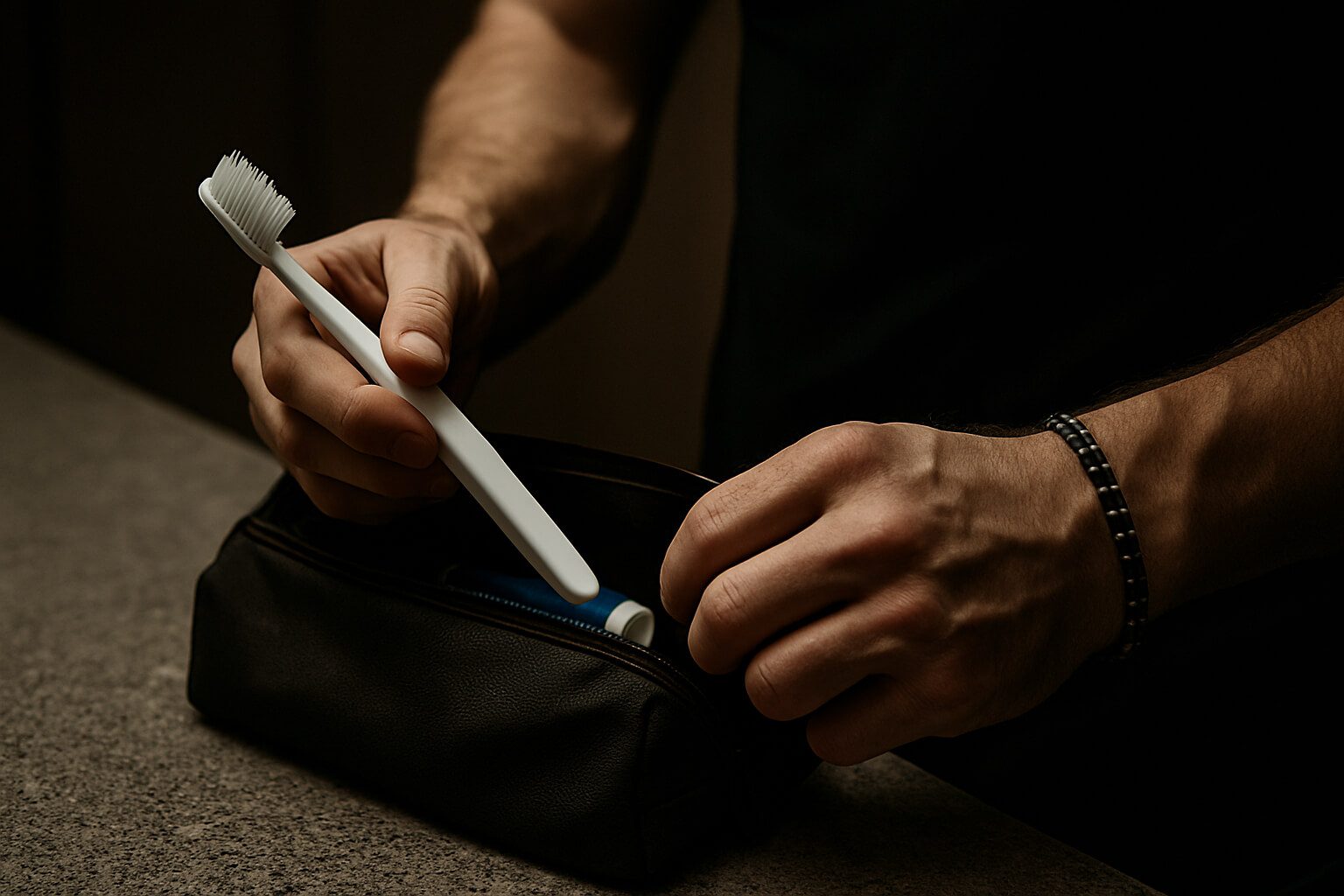
It started with a toothbrush.
How Habits That Stick Build on Each Other
Once brushing my teeth became a given, it unlocked something bigger. It didn’t make me perfect. But it gave me a foothold—something solid I could stand on while I figured the rest out. And from there, I started stacking—not with some master plan or fancy habit tracker. Just with the next right thing.
First, it was deodorant. Then regular showers. Then waking up earlier. Then going to bed earlier so waking up didn’t wreck me. Then setting a consistent time to write, or pray, or just be still. These weren’t quick wins or short bursts of motivation. These were the beginning of habits that stick. Each one didn’t replace the last—it built on top of it, forming something stronger and more stable than anything I’d had before.
Brushing my teeth wasn’t just about hygiene. It became an anchor. A trigger that reminded me, “You’re not the guy who skips the little things anymore.” That one change became the foundation I used to build everything else. It shaped the way I approached my mornings, my mindset, and even the way I lead in my own home.
Now I tell my son the same thing I had to teach myself: “Every time you take a shower, you brush your teeth. Every time you’re getting ready for something, you brush.” It’s simple, but powerful. Because it’s not about perfection—it’s about creating rhythms strong enough to carry you even when your feelings don’t.
That’s how you build habits that stick. You don’t wait for motivation. You attach the new to the known. You stack one honest habit on top of another until the momentum starts carrying its own weight. And before you know it, your life starts to change—one layer at a time.
The Hotel Toothbrush Story
Not long ago, I was driving my brother to Georgia for knee surgery. It was a last-minute trip, and I threw my things together quickly before we hit the road. We made it to the hotel, checked in, and I started unpacking for the night—only to realize I didn’t bring a toothbrush.
Now, years ago, that wouldn’t have even phased me. I might’ve shrugged it off. Maybe swished some water around and called it good. But that night? It genuinely bothered me. Not just because my breath might be bad, but because skipping it didn’t feel like an option anymore. I wasn’t debating. I wasn’t negotiating. I was just… unsettled by the idea of missing something that had become part of who I am.
So I grabbed my keys, walked across the street to a gas station, and bought a toothbrush and a travel-sized tube of toothpaste.
It wasn’t for show. Nobody was watching. I wasn’t trying to earn a badge or prove anything to anyone. That moment was for me. Because brushing my teeth isn’t something I only do when it’s easy or convenient. It’s one of those habits that stick—because it’s woven into my identity.
If you want the full story behind that moment—and how one small habit became the starting point for rebuilding my discipline—you can read the original article here.
And that’s the shift most people miss. Building daily discipline isn’t about chasing a streak or obsessing over some impossible standard. It’s about becoming someone who doesn’t argue with himself over the basics. It’s about doing what needs to be done—not for applause, not for a perfect record, but because it’s just what someone like you does.
That late-night walk to the gas station? That wasn’t about breath. That was about becoming. It was a quiet victory. A reminder that this is who I’ve become—and I’m not going back.
When Habits That Stick Become Who You Are
There was a time when I kept score.
Day 3.
Day 11.
Day 47.
I tracked how many days I brushed my teeth, how many days I stuck to my diet, how many mornings I got up at 4:30 like I said I would. Every checkmark felt like a win. And in the beginning, I needed that. I needed to see progress on paper. I needed the little dopamine hit that came with the tally.
But somewhere along the line—I stopped counting.
Not because I gave up. But because I didn’t need to anymore.
Now, brushing my teeth is as normal as locking the front door when I leave the house. Or wiping after I use the bathroom. You don’t need a habit tracker for that. You just do it. Because it’s who you are.
That’s what habits that stick actually look like. They stop being goals you try to remember and start becoming reflexes you don’t question. The discipline moves from your to-do list to your identity.
And don’t get me wrong—tracking has its place. Early on, it’s a helpful tool. It keeps you focused when the behavior hasn’t anchored yet. But the endgame isn’t a longer streak. It’s no longer needing the streak to stay consistent.
Because that’s when you know it’s working.
You brush your teeth.
You show up.
You follow through.
Not because you’re hyped. Not because you’re counting. But because it’s just what someone like you does.
That’s how habits that stick are born—not in the numbers, but in the shift from effort to embodiment.
Desire vs. Identity
Here’s the thing—I never stopped wanting to be clean. I never stopped wanting fresh breath or to not be the guy people secretly avoided because of how his mouth smelled. Even when I wasn’t brushing my teeth, the desire was there. I didn’t want to be gross. I didn’t want to be judged. I didn’t want the shame.
But desire isn’t enough.
There’s a difference between wanting something and becoming someone. And for a long time, I was stuck in that gap.
I wanted to be better. I wanted to be healthier. I wanted to be more consistent. But I hadn’t crossed the line where that desire actually became identity. I still saw myself as someone who struggled. Someone who meant well but couldn’t follow through. Someone who hoped to change—but didn’t expect to.
What changed everything wasn’t more want—it was a shift in who I believed I was becoming.
That’s the secret to habits that stick. They don’t form around how badly you want something. They form when the action lines up with who you’ve decided you are. When brushing my teeth became about identity—not just appearance—that’s when it finally locked in.
Discipline started to stick when I stopped treating it like a performance and started treating it like a reflection of who I was. Brushing my teeth wasn’t about checking a box or earning a gold star. It was about no longer being okay with the gap between the man I was and the man I needed to be.
And once that clicked, it stopped being a struggle. Not because I became perfect—but because I became committed.
Desire says, “I wish I could.”
Identity says, “This is who I am.”
And that alignment? That’s what creates habits that stick.
What Actually Makes Habits Stick for Good
Here’s what I’ve learned after years of false starts and short-lived streaks:
Habits that stick don’t come from motivation alone.
They come from identity—rooted in commitment and a refusal to let go of who you’re becoming.
Motivation fades.
Perfection cracks.
Hype burns out.
But when the action is tied to who you believe you are, it changes everything. You stop chasing streaks and start building standards.
There’s this story I love from Eric Thomas—ET, the Hip Hop Preacher. Someone asked him how to stop hitting snooze and start waking up early. He told them:
“If I told you to meet me at the coffee shop at 4:00 AM and I’d give you a million dollars… you’d be there.”
Why?
Because it would matter enough to you.
That hit me hard. Because it exposed something true:
We’re not incapable. We’re just often unaligned.
We can show up early. We can push through the discomfort.
We just don’t—unless the reason is big enough.
For me, brushing my teeth became more than hygiene.
It became proof.
Proof that I could be consistent.
Proof that I could change.
Proof that I wasn’t stuck with who I used to be.
Habits that stick aren’t built on streaks.
They’re built on identity.
They grow from the decision:
“This is who I am now. And I don’t let go of the man I’m becoming.”
Why This Isn’t About Hygiene
Let’s be clear—this isn’t a post about dental care.
It’s about the quiet power of keeping a promise to yourself. It’s about the unexpected doorway into becoming the kind of man who builds habits that stick—starting with something so small, so basic, that nobody else even notices… but you do.
Because that one shift—the moment you stop saying “someday” and start brushing your teeth, eating better, showing up, praying, saving—whatever it is—that moment changes everything.
You stop trying to become “a new man,” and start becoming yourself—on purpose.
And if you’re somewhere in the middle of that journey, just know:
You don’t need perfection.
You don’t need a clean streak.
You don’t need to wait for Monday.
You need to show up. Again.
Even if it’s just brushing your teeth.
Want help building habits that stick?
Grab the Start Strong Devotional—a short, real-world tool made for guys who’ve quit before but don’t want to quit anymore.
And if this post hit home, join the email list. You’ll get content like this to help you keep showing up—even when you feel stuck.
P.S. If you missed a day? You’re not broken. Just start again. Today.



0 Comments