
Table of Contents
Growing Up in Fear: When Anxiety Becomes Normal
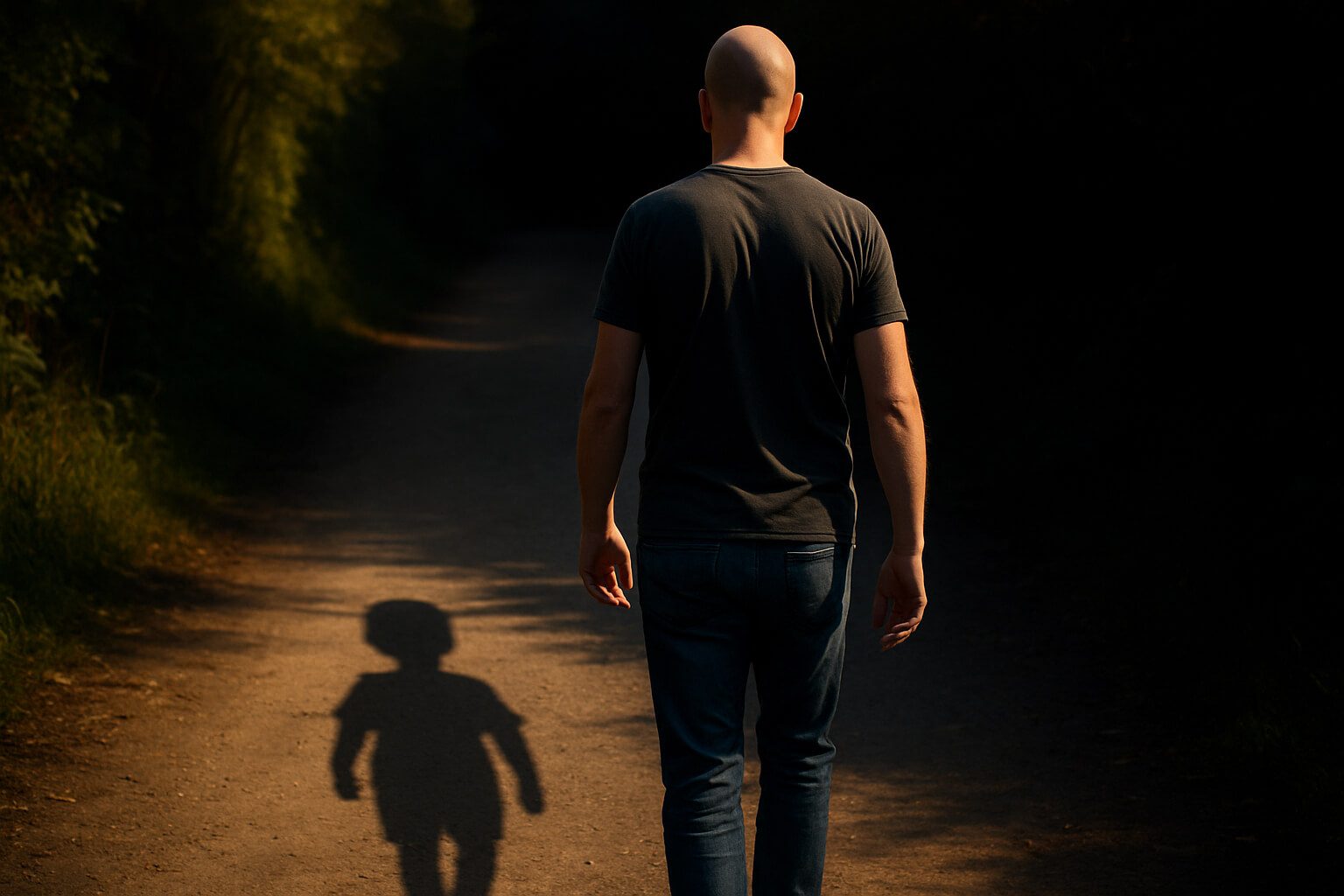
Most kids grow up learning how to read, ride a bike, or tie their shoes. When I was growing up in fear, I learned how to freeze. Before I ever understood trust, my nervous system was already trained to brace for impact.
As a child, I didn’t realize that fear wasn’t something everyone experienced daily. To me, it was just the air we breathed—the constant background hum in our home. Some houses are filled with music, laughter, and warmth. Ours was filled with tension, tightness, and triggers.
Fear never announced itself loudly. Instead, it crept in silently: through the sound of heavy footsteps or a door slamming just a bit too hard. It lingered in the unsettling quiet after a shout, leaving us wondering if it was over or just beginning.
People often associate childhood trauma with big events—police visits, emergency rooms, or extreme violence. But growing up in fear isn’t always so dramatic. Sometimes the most profound trauma comes from uncertainty. Not knowing what mood my dad would be in. Wondering if “I love you” meant genuine connection or manipulation. Feeling my stomach drop at the sound of the front door opening because I didn’t know who was coming home.
I didn’t flinch because fear startled me—I flinched because fear was my normal.
My body was wired early to anticipate a hit, a yell, or even just a cold stare. This wiring didn’t fade when I left home; it shaped who I became, influencing my friendships, relationships, and even my faith.
This isn’t about blame—it’s about awareness. You can’t heal what you don’t acknowledge. For me, the first step toward healing was recognizing that growing up in fear wasn’t just a temporary reaction; it had become a rhythm, deeply woven into my identity.
When Home Never Feels Safe
Growing up in fear meant we never lived anywhere long enough to truly call it home. The scenery changed constantly, but the story stayed painfully familiar: small rooms, secondhand furniture, and a relentless atmosphere of survival.
I vividly remember the mousetraps—the kind baited with peanut butter designed to snap necks. To us, that was normal. So were the cold cement floors that left your back aching if you fell, and the nights spent sleeping on mattresses or futon pads directly on the ground, making sleep feel more like camping than resting.
Our holiday decorations consisted of construction paper chains and popcorn strings. We crafted homemade ornaments because there simply wasn’t money to buy them. My mom tried her hardest to inject joy into our chaos, but happiness was always fleeting. Some nights, she’d stay awake just to keep bugs from crawling over us. That’s how low things sometimes got.
Of course, not every house felt entirely bleak. I remember one place with a creek nearby, where we caught crawdads for fishing. It even had a backyard—technically our front yard—but it still felt special. Yet even in those slightly nicer homes, we were never truly secure. One church-owned house kicked us out because my parents refused to stop smoking. Another place found us washing clothes by hand, drying them out on dirty fences. None of this felt unusual at the time. It was just life.
Looking back now, I realize our poverty went beyond money—it was a poverty of stability. We could never trust what came next, never plant roots, never truly rely on the ground beneath our feet. When your address constantly changes, your sense of identity becomes equally unsettled.
A house may offer structure, but a real home provides peace. Growing up in fear meant we had plenty of walls, but peace was something we never found behind them.
Recognizing Hidden Trauma Triggers
Growing up in fear creates a kind of anxiety that’s difficult to put into words. It lives in your skin, waits quietly in your breath, always alert.
When I was a kid, fear didn’t always manifest as chaos or violence. Sometimes, fear was silence—the unsettling quiet right before a door slammed, or the tense stillness when someone came home angry.
My body learned to detect danger long before my mind could process it: the heavy footsteps in the hallway, the shuffle of keys, the lock clicking into place a little too forcefully. I didn’t always know what would happen next—but my heart did, my muscles did, my nervous system did.
I became an expert at interpreting subtle shifts in tone, as if my life depended on decoding a survival message. I could sense tension long before it erupted. When someone raised their voice or cleared their throat in a certain way, my body instinctively braced itself. Not because I was overly dramatic, but because I knew exactly what was coming.
For a deeper look at how faith helped me begin healing from that kind of trauma, read my full redemption story here.
Fear made me freeze—not from indifference, but because stillness felt safer than any reaction. One wrong movement, one innocent question, could trigger a storm.
So I became quiet. I made myself small. I memorized the layout of every house, mentally mapping hiding places where I could vanish quickly. I trained myself not to flinch, not to cry, not to provide any reason for anger.
That’s what people don’t always understand about growing up in fear: your body learns protective behaviors that your mind struggles to reverse—sometimes for years or even decades.
I didn’t know how to relax or how to genuinely feel safe. Safety was foreign to me. Fear? Fear was familiar—it was home.
Coping with Unexplained Abuse
When you’re growing up in fear, some pain becomes normal—but at least certain kinds of pain make sense. You fall, you bleed, you cry. You understand why it hurts. But what about the pain that arrives suddenly, without warning or reason, offering no chance to prepare?
That’s the kind of pain I knew.
Before my fourth birthday, I’d already been choked with a jump rope—not playfully, but violently enough to make breathing difficult. I didn’t know why it happened; I only knew I couldn’t move or scream. My only option was to freeze, hoping it would stop.
Another day, I was told my baby brother had been thrown in the trash. To this day, I don’t fully understand what that meant. Was it a cruel joke, a punishment, or a threat? All I knew was that it twisted my stomach and sent my mind spinning. I searched for him. I cried. I believed the lie completely.
Then there were the punishments—not simple timeouts or stern lectures, but sudden, sharp, repeated pain. Punished for things like needing to use the bathroom, for crying, or for simply being in the wrong place at the wrong time.
There was never an explanation afterward. No comfort. No adult telling me, “That shouldn’t have happened.” Just silence—sending a clear, devastating message: this is what you deserve.
Growing up in fear and abuse doesn’t just hurt physically; it scrambles your sense of reality. You start believing that maybe you are the problem—that you’re too needy, too emotional, too weak. You stop asking questions and stop expecting kindness. Instead, you simply endure.
When pain becomes your first introduction to love and authority, it leaves deep marks. It builds walls where trust should be, and it breeds shame where there should be compassion.
I didn’t need my parents to be perfect. But I desperately needed someone to say, “I see you. That was wrong.” No one ever did. And so the pain stayed buried, unanswered.
When Kids Take On Adult Roles
Growing up in fear means you often pick up responsibilities long before you’re ready. I was only in seventh grade when my stepdad went to jail. While most kids my age worried about lockers and algebra homework, I was trying to figure out how to become the man of the house.
No one explicitly handed me that role, but nobody stopped me from assuming it either. I saw the fear in my mom’s eyes. My younger brothers looked at me for answers I didn’t have. Somewhere deep inside, something clicked. I convinced myself it was my duty to step up, to be strong, to protect them—to provide whatever a thirteen-year-old could.
It wasn’t about earning money; it was about presence, tone, and control. I worked hard to keep the peace, keep my brothers in check, and hold my mom together emotionally. I carried the emotional weight of an adult while desperately trying to maintain a sliver of childhood.
The truth is, I wasn’t ready. I didn’t have the tools or the maturity. I didn’t know how to lead with love or stand firm without anger or fear. All I knew was that I couldn’t let our world collapse further.
Now that I’m a father myself, I look at my son—about the same age I was then—and can’t imagine placing such a heavy burden on his shoulders. I can’t fathom him lying awake at night, worrying about how to hold our family together.
Yet that’s exactly what I did. Not because I was heroic, but because no one else stepped up.
Growing up in fear like this wired a deep belief inside me: it was my responsibility to fix everything. I wasn’t allowed to collapse. If I didn’t hold it all together, everything would unravel. It took me years to unlearn that lie, but back then, it felt like the only truth I had.
The Pain of Emotional Neglect
When you’re growing up in fear, some of the deepest wounds come from words left unsaid. No one ever asked me, “How are you doing?”
Not after the screaming matches, not after evictions, not after bruises or cold nights spent hungry. Not even after my parents went to jail. No adult ever pulled me aside and simply asked, “Are you okay?” No one helped me process the chaos.
Because nobody asked, I stopped expecting anyone to care. Without a language for my pain, I simply stopped speaking about it. I buried my hurt, convinced myself it wasn’t important. At school, I became the kid who smiled through everything. At home, I was quiet, pretending everything was fine. I looked okay on the outside because no one wanted to acknowledge what was happening inside.
Looking back now, I don’t think my parents were intentionally cruel. They were overwhelmed, embarrassed, maybe even ashamed. But the thing is, they were the adults—it wasn’t their job to protect themselves from difficult conversations. It was their job to protect me.
Instead, silence became the unspoken rule of our family. We didn’t talk about fights, fear, or damage. We just moved forward as if nothing had happened. After a while, this silence made me feel crazy for feeling anything at all.
That silence didn’t just keep me quiet; it conditioned me to see emotion as weakness, vulnerability as a threat. It taught me to push through pain instead of processing it.
That’s a difficult pattern to break. But if no one has ever said it to you before, let me say it now: What happened to you mattered. What you felt mattered. You were never meant to carry it alone.
The Hidden Shame of Childhood Poverty
When you’re growing up in fear, poverty doesn’t feel unusual—until you leave the house.
Inside our home, chaos was normal. Mousetraps scattered around the rooms, mattresses thrown directly on cold floors, clothes hung out to dry on dirty fences—it all seemed ordinary to me. But the first time I visited a friend’s clean, well-kept home, or saw their gaming consoles and refrigerators filled with food, I didn’t feel sadness. I felt shame.
I remember sitting in class, staring down at my worn-out shoes, desperately hoping no one would notice. I dreaded group projects, terrified someone would suggest coming over to my house. I didn’t want their questions, their pity, or their judgments. Being seen felt unbearable.
Shame makes you feel invisible yet painfully exposed all at once. So I learned to shrink myself, to pretend I didn’t care, to laugh off hurtful comments or glances. I mastered the art of pretending—because being “less than” in someone else’s eyes was too painful.
The hardest part wasn’t simply the comparisons; it was the silence. Pretending at home that everything was fine, and pretending at school that nothing bothered me. There was no safe place to be real.
This kind of shame doesn’t just disappear with childhood. It follows you into adulthood, influencing how you dress, speak, and show up in spaces where you feel you don’t belong. I hid from attention because deep down, I feared if people truly saw me, they’d agree with the voice inside that constantly whispered I wasn’t enough.
Finding Moments of Peace Amid Chaos
Growing up in fear meant any brief pause from chaos felt significant—even if it was just a simple ride in a church van.
Every Sunday, a church van would pass through our neighborhood, picking up kids whose parents didn’t attend. My brothers and I climbed in eagerly, partly because our parents welcomed the quiet at home, but mostly because, for us, it offered something entirely different—structure, calm, even kindness.
On those short rides, no one yelled or slammed cabinets. No one was drunk or pacing angrily. It was quiet. Not quite the safety of a sanctuary, but peaceful enough to feel safe. I don’t remember much about the sermons or the hymns we sang, but I vividly remember those rides—the snacks, the smiles, the adults who weren’t always angry.
When you grow up in fear, it can feel like God was absent. But Psalm 34:18 says the Lord is close to the brokenhearted. I didn’t feel that back then—but I see it now.
We didn’t stay consistently involved with church. That brief season came and went. But those Sunday morning rides planted something important inside me—a curiosity, perhaps. A crack of light in a wall of dysfunction. I didn’t leave church each Sunday fully healed, but I left knowing that another, calmer world existed beyond my family’s chaos.
And when you’re raised in an environment of constant fear and dysfunction, even the smallest glimpse of calm can feel miraculous.
Why We Love Those Who Hurt Us
Growing up in fear often means forming complicated bonds with those who hurt you. It’s hard to explain the love you can feel for someone who caused you pain—but that’s the strange loyalty born from surviving trauma.
My stepdad was far from perfect. There were times I lived in fear, moments when I needed protection he didn’t provide. Yet he stayed. He didn’t abandon us. When you’ve witnessed abandonment firsthand, the simple act of someone staying earns a complicated kind of respect.
He wasn’t my biological father and rarely treated us tenderly, but he still taught me things. He worked, cracked jokes, wrestled with us, and played catch in the yard. On some days, he was the closest thing to normal I’d ever known. As a child, you grasp onto any semblance of stability. Good days become treasures, smiles become lifelines.
Looking back, I clearly see the harm, the missed opportunities, and the unnamed trauma. But I also see the boy I was—a kid craving stability so badly that I clung tightly to anything resembling it. That’s the messy reality of growing up in fear. I loved him, and he hurt me. Both truths coexist.
Survival isn’t just about enduring fear—it’s also about attachment. It’s making sense of chaos by holding tightly onto any goodness you can find. That’s exactly what I did. It wasn’t clean, healthy, or fully honest, but it kept me going.
Sometimes, we survive by loving the only version of love we’ve ever known.
Navigating Guilt Between Siblings
Being the oldest sibling while growing up in fear carries a heavy weight—one that’s difficult to articulate. My brothers were close in age, but the gap was significant enough for me to feel more like their protector than their peer. I played, fought, and laughed with them, but beneath it all was the unspoken responsibility to shield them from our chaotic reality.
Truthfully, I couldn’t protect them fully—I didn’t have the tools or maturity. I was just a kid myself, but that didn’t prevent me from feeling responsible. I remember constantly stepping in to buffer tense situations, distracting them from the turmoil, desperately trying to lighten their burdens. It was never enough, but I never stopped trying.
Eventually, I left—not dramatically, just naturally as older siblings often do. I moved on, aged out, and started creating a different life. But leaving my brothers behind continues to weigh heavily on me in ways I rarely share. There’s an enduring guilt that lingers—the feeling that I abandoned them, that I saved myself while leaving them behind in the chaos.
Today, I understand that staying wouldn’t have changed the outcome. I couldn’t have rescued them. Yet understanding doesn’t erase the ache or make those memories any lighter. I love them deeply. I always have. But a part of me still wonders what more I could’ve done.
Some wounds aren’t about the things that happened. They’re about what didn’t—the protection we couldn’t offer, the words we didn’t know how to say, and the moments we wish we could rewrite. For me, these wounds still exist in the silent spaces between brothers.
Growing Up in Fear: Why Surviving Isn’t Enough
For a long time, I thought simply standing upright meant I’d conquered my past. I wasn’t in jail, didn’t struggle with addiction, held steady jobs, and had people depending on me. On the surface, it seemed I’d made it. But the harsh truth I eventually learned is this: surviving isn’t the same as truly living.
Growing up in fear taught me how to function under constant pressure. It showed me how to smile even when things hurt deeply, and how to keep moving forward no matter what. These survival instincts kept me alive, but they also kept me numb. They buried pain so deeply that I stopped acknowledging it altogether. For years, this numbness looked like strength—but in reality, it was silence disguised as armor.
I built my identity on performance, on never needing help. I became the guy who didn’t flinch, didn’t cry, didn’t quit. But beneath this tough exterior, I was still that frightened child hiding quietly in my room, holding my breath with every slamming door. Still convinced that love had conditions and that safety could vanish instantly.
Looking back now, I understand clearly: these defense mechanisms saved my life once, but they couldn’t carry me toward the life I genuinely wanted to live. They blocked intimacy, peace, and joy. Real living—true freedom—demands more than merely enduring. It demands healing.
Healing doesn’t start with perfection; it starts with permission. Permission to honestly acknowledge your past. Courage to name your wounds. Faith to believe that something better can exist beyond survival.
If you’ve been growing up in fear, your story doesn’t have to end in survival mode. This isn’t the moment everything magically gets better—but it can be the moment your healing begins. It starts when you stop pretending that simply surviving is enough.

0 Comments