
Table of Contents
The Most Important Habit You’re Not Tracking
There’s a habit most men overlook. You won’t find it in your fitness tracker or your budget spreadsheet. It’s not waking up early or sticking to your macros. It’s not flossing or finishing your to-do list.
It’s this: how to get back on track when you fall.
That’s the habit that separates the man who keeps moving forward from the man who disappears for weeks, months, or years. It’s the hidden discipline—one nobody claps for, nobody tracks, but everyone needs.
Because failure isn’t rare. Missing the mark isn’t some crisis moment—it’s part of the process. You will oversleep. You will go off plan. You will make a bad decision with food, money, or your time. That’s not weakness. That’s just life. But what happens next? That’s where real discipline lives.
The old version of me thought one mistake meant I had to start over. Like I’d broken some invisible rule and now everything had to reset. That mindset cost me years. It made guilt feel productive. It made shame feel deserved. And it kept me stuck.
Now I know better. Now I understand that discipline isn’t just about sticking to the plan—it’s about how to get back on track when the plan breaks.
If you’re not actively working on your bounce-back muscle—if you’re not learning how to recover without self-hate—you’re missing the most important discipline of all. Because the men who win long-term aren’t the ones who never fall. They’re the ones who refuse to stay down.
And if you want to build a life worth being proud of, that’s the habit you need to master first.
My Story of Spiraling—and Learning How to Get Back on Track
There was a time in my life when everything fell apart.
My marriage had just ended. I was getting divorced, and with that unraveling came everything else—my finances, my habits, my health, my faith. I wasn’t just slipping. I was spiraling.
I stopped tracking anything—my spending, my eating, my emotions. I drank more than I should. I was out late at bars trying to distract myself from the silence that waited for me at home. I played video games until the sun came up just so I wouldn’t have to sit alone with my thoughts. My house felt empty. My soul felt even emptier. I didn’t open my Bible. I didn’t pray. I isolated myself from everything that had ever kept me grounded.
I lost control of my budget—credit cards maxed, car repossessed, foreclosure papers on the table. My health took a hit. My relationships suffered. My sense of purpose evaporated. And the worst part? I believed I deserved it. I thought, This is who I am now. A man who blew it.
That’s what spiraling does—it convinces you that your lowest moment is your permanent identity. It tells you there’s no point in trying to rebuild because the damage already defines you. And the longer you listen to that voice, the harder it becomes to remember how to get back on track.
I know what it’s like to quit everything. To drown. To disappear into shame.
That’s why this chapter matters so much. Because I’ve lived the cost of not learning how to get back on track when life goes off the rails. And if I can help you avoid that pit—or claw your way out of it a little faster—then none of that pain was wasted.
Slip vs. Spiral: How to Get Back on Track Before It’s Too Late
Not every mistake is a spiral. But every spiral starts with a mistake.
Let’s define the terms, because this matters. A slip is a moment—a single decision you didn’t plan for. A small deviation from your standard. Maybe it’s eating more peanuts than you meant to after dinner. Maybe it’s oversleeping, skipping a workout, or swiping the credit card when you swore you wouldn’t. It’s a break in your rhythm—but it’s not a character collapse. It’s not aligned with who you want to be, but it happens. You notice it. You name it. You move on.
A spiral is what happens when that slip turns into a mindset. It’s not the mistake—it’s what follows. It’s the guilt. The shame. The inner voice that says, “I knew it. I can’t do this. I always mess up.” And once that voice takes over, you start justifying more misalignment. You stop brushing your teeth on time. You stop tracking your habits. You figure, “Well, I already blew it—might as well keep going.” Before long, one bad decision turns into ten. One bag of peanuts turns into a weekend of chaos.
The danger isn’t in the misstep—it’s in what you decide that misstep means.
That night I ate off-plan and had more than I intended? Sure, it wasn’t ideal. But what mattered most was what I did next. I didn’t spiral. I didn’t throw the whole week away. I recognized the slip, called it what it was, and chose to get back on track the next day.
That’s the line that separates growth from collapse.
Because building discipline isn’t about never messing up. It’s about knowing how to get back on track without collapsing. Slip-ups are part of the process. Spiraling is optional.
How We Got Back on Track Financially—Before It Got Worse
Spiraling doesn’t always show up as a dramatic collapse. Sometimes, it slips in slowly—through soft compromises, quiet justifications, and the slow creep of drift. That’s exactly what happened with our finances.
My wife and I had a solid budget in place. Groceries, bills, savings, giving—it was all accounted for. We were on the same page and had built a system that worked. But over time, little things started sneaking in. She’d grab something from Goodwill or TJ Maxx. I’d pick up a gadget or snack that “wasn’t a big deal.” These weren’t emergencies—they were indulgences without intention. And more importantly, they weren’t part of the plan.
We didn’t blow thousands of dollars overnight. But we were drifting. Slowly. Repeatedly. And the danger wasn’t the money—it was the mindset. We weren’t being honest with ourselves. We weren’t communicating. And if that drift had continued unchecked, it would’ve become a full-blown spiral.
Thankfully, we caught it. We had built a habit of sitting down together to review the budget. And in one of those conversations, we both saw it—we were slipping. But instead of pretending it wasn’t happening, we named it. And that gave us the power to change it.
So we added a simple fix: personal allowances. A little fun money each month, just for us. No guilt. No explanation needed. That small adjustment kept us aligned—and kept the spiral from starting.
Here’s the truth: if you want to know how to get back on track, the first step is honesty. You can’t correct what you won’t confront. Drift thrives in silence. But awareness creates margin for adjustment.
You don’t have to be perfect. You just have to notice—and act—before the drift turns into damage.
How to Get Back on Track with Diet (Even When It Feels Impossible)
Out of all the habits I’ve built—waking up at 4:30 AM, writing every day, showing up consistently—diet is still the one that tests me the most. I don’t struggle to get out of bed. I don’t dread creating. But staying disciplined with food? That’s where the real battle lives.
It’s not a knowledge problem. I’ve done the work. I’ve tracked calories. I’ve lived carnivore, tried keto, gone paleo. I’ve counted macros and weighed single servings of almonds like I was prepping for a bodybuilding show. I’ve followed the rules with military precision—and I’ve also broken them with full-speed rebellion. This part of my life still feels tender. Not broken. Not hopeless. Just… unfinished.
And I think that matters.
Because it’s easy to assume that men who seem disciplined have it all figured out. But we all have a weak spot—an area where our identity hasn’t quite caught up to our intentions. For me, that spot is food. It’s the one habit where I still hear shame whisper the loudest. The one place where slipping up tempts me to spiral.
But ironically, it’s also where I’m learning the most about how to get back on track.
Because grace doesn’t grow in your strengths. It shows up where you fall. It’s the quiet voice that says, “Let’s reset,” when every part of you wants to say, “Forget it.” Grace isn’t permission to drift—it’s power to return.
Without discipline, grace becomes chaos. Without grace, discipline becomes punishment. But when they work together, you get something rare: resilience.
My diet is teaching me that. Not through perfection, but through persistence. Through getting up—again and again.
That’s not weakness. That’s what getting back on track really looks like.
How to Get Back on Track Without Beating Yourself Up
One of the most important disciplines I’m building right now isn’t something you can measure. It doesn’t show up in a progress tracker or habit app. There’s no streak counter. No checklist. Just a quiet, internal muscle I’m learning to strengthen—my ability to slip without spiraling.
That might sound small. But for me, it’s been a breakthrough in learning how to get back on track.
There was a time when the smallest deviation would wreck my whole mindset. If I slept in, skipped a workout, or ate something off-plan, it felt like a moral failure. I told myself I’d ruined everything, so I might as well go all in and start over later. But all “later” ever did was keep me stuck.
That mindset wasn’t just unhelpful—it was destructive. I wasn’t failing because I couldn’t follow the plan. I was failing because I didn’t know how to forgive myself when I didn’t follow it perfectly.
But that’s changed.
Now, when I have a pajama day—when I stay in lounge clothes, delay brushing my teeth, or skip the routine—I don’t make it mean anything bigger than it is. It’s just a slower day. Not a sign of weakness. Not a collapse in character.
Same with the night I ate more peanuts than I meant to. I didn’t weigh them. Didn’t track them. But I didn’t turn that moment into a spiral. I didn’t let it undo me. I named it. Noticed it. And got back on track the next day.
Even holidays and special occasions don’t throw me anymore. I plan for flexibility. I choose it on purpose. And because it’s intentional, I don’t carry guilt into the next morning.
This practice—of slipping without shame, of allowing without excusing—is changing how I live. It’s helping me understand that learning how to get back on track isn’t about being harder on myself.
It’s about building the kind of strength that gets up without delay and keeps going without punishment.
Because one step off course doesn’t mean you’ve lost your way.
It just means you need to take the next one in the right direction.
A Lesson in Forgiveness—and How It Helped Me Get Back on Track
Back when I was deployed in Iraq, I worked in a detainee facility called Camp Bucca. Every morning, we’d get breakfast—basic stuff like fruit, boxed drinks, and plastic-wrapped sandwiches. It became a familiar routine shared with the Iraqi correctional officers we worked alongside. But one day, something unforgettable happened.
One of the officers, a Muslim man we respected and trusted, picked up a sandwich without realizing it had pork sausage. He ate it, and only after finishing did someone notice what was inside. The moment he found out, everything changed. He froze. His whole demeanor shifted. You could see the shame hit him like a wave.
For him, this wasn’t just an accidental diet slip—it was spiritual. Pork is forbidden in Islam. Even though it was unintentional, he felt like he had deeply dishonored his faith. His guilt wasn’t about food—it was about identity. And he was devastated.
But what happened next left a permanent mark on me.
Several other Muslim officers immediately gathered around him. They weren’t harsh. They weren’t condemning. They reminded him gently that it was an honest mistake. He didn’t know. He didn’t choose it knowingly. And most importantly, they reminded him that he was forgiven—by them and by God.
He needed to hear that. Until he believed he was forgiven, he couldn’t begin to forgive himself. That grace—spoken out loud, offered freely—became the path for him to recover.
That moment changed how I think about forgiveness—especially when it comes to how to get back on track after slipping up. Because as a Christian, I see a command in Scripture to not only receive forgiveness but to extend it. Not just to others—but to ourselves.
Forgiveness isn’t soft. It’s strength. It’s faith in action. If we believe God’s grace covers our biggest failures, why do we struggle to give ourselves grace for smaller stumbles? Why do we encourage others to get back on track, while quietly telling ourselves we’re not worthy to?
You can’t live in freedom while dragging shame behind you. That Iraqi officer needed someone to remind him of who he was—and so do you. Learning how to get back on track starts with forgiveness. Not someday. Not after punishment. But now.
It’s not weakness. It’s obedience. And it’s the only way forward.
Why Forgiveness Might Be the Key to Getting Back on Track
Forgiving yourself doesn’t come naturally. Not for most of us. It’s not instinct—it’s practice. It’s a discipline. And when it comes to learning how to get back on track after a failure, that discipline might be the most important one you ever build.
Most guys think of discipline as something external. Wake up early. Go to the gym. Track your meals. Stick to your budget. It’s action-based. Visible. Physical. But what if one of the most powerful forms of discipline isn’t about what you do—but how you respond when you don’t?
Forgiveness—especially self-forgiveness—isn’t just a feeling you wait for. It’s a decision. A muscle you train. A habit you build, just like brushing your teeth or hitting your step count. And like all habits, it only strengthens with repetition.
At first, it feels fake. You screw up and tell yourself, “It’s okay. I’ll do better tomorrow.” But your brain fights back. It brings up all the times you said that before and didn’t follow through. It reminds you of broken promises and past failures. That’s when forgiveness takes real strength—not because it erases the slip, but because it dares to believe you can still recover. That you can still become the man you’re called to be.
And that belief? That’s the start of how to get back on track.
Jesus didn’t teach forgiveness as a nice suggestion. He commanded it. When Peter asked how many times to forgive—seven times?—Jesus said no. Seventy times seven. (Matthew 18:21-22) Meaning: as often as it takes. Forgiveness isn’t weakness. It’s consistency. It’s freedom. And it’s the same posture we need to adopt toward ourselves if we want to keep showing up for our habits and our lives.
Because here’s the truth: you can’t build lasting discipline without grace. Without forgiveness, your routines become a punishment. Your habits become a prison. But when grace becomes part of your system, every slip becomes a chance to prove you’ve grown.
You’re not just practicing success—you’re practicing recovery.
And every time you forgive yourself, you’re not falling behind. You’re proving that you know how to get back on track.
The Truth About Motivation—and How to Really Get Back on Track
When you’re spiraling—when the guilt starts stacking and the shame creeps in—it’s tempting to reach for something external to pull you out. A Bible verse. A podcast. A David Goggins clip yelling at you to “stay hard.” Maybe it’s a playlist that reminds you who you want to be. Maybe it’s a sticky note on your mirror or a photo on your fridge.
And let’s be clear—those things matter. Use them. Stack the deck in your favor. Set reminders. Print affirmations. Fill your environment with support.
But here’s the uncomfortable truth: none of those things will teach you how to get back on track if you’re not willing to choose it for yourself.
They’re support, not salvation.
You can have a phone full of motivational content, a library of devotionals, and a thousand reasons to change—and still fall apart in a moment of weakness. You can nod along with every sermon and every reel, but when 10PM rolls around and the cravings hit, you still have to choose. When your alarm goes off and your body says, “Not today,” you still have to decide.
Because discipline isn’t about collecting hacks—it’s about making a decision when it counts.
And that decision? It almost never feels good in the moment. It’s not flashy. It’s not loud. It’s not Instagram-worthy. It’s internal. Quiet. Gritty. It’s the moment where you pause, feel the pull of your old habits, and say, “Not this time.”
That’s how to get back on track—not with hype, but with humility. With a slow breath and a steady will.
It’s you versus the part of you that wants to stay comfortable. The part that says, “Just this once won’t hurt.” The part that’s more afraid of failing again than it is hungry for change.
And in that moment, you have to slow time down—like Neo in The Matrix. You have to see the temptation coming. See the excuse forming. And decide, This isn’t who I am anymore.
Nobody else can make that decision for you.
Not your mentor. Not your pastor. Not your favorite YouTuber. Not even Jesus.
Yes, He gives you strength. Yes, the Holy Spirit empowers you. Yes, grace walks with you. But God doesn’t override your will. You still have to move your feet. You still have to get up. You still have to choose the next right thing.
So use the tools. Set the reminders. Keep the verse on your dashboard. But don’t forget—they’re just support.
The power comes when you choose.
And the more often you choose well, the faster you learn how to get back on track—not by force, but by faith. Not by hype, but by history. One small win at a time.
That’s what makes you unshakable.
How to Get Back on Track When You Feel Like You’ve Blown It
If you’re reading this while eating junk you said you wouldn’t touch again…
If you’re deep in the middle of a “what’s the point?” week…
If you’re telling yourself, “I’ve already ruined it, might as well keep going…”
Let me speak directly to you.
You don’t have to stay here.
I know how loud the shame gets when you’re in the dark. I know how fast one off-plan night turns into a weekend, how a weekend turns into a lost week, and how a lost week starts to feel like your new identity. I’ve lived in that spiral. I’ve sat in the wreckage of my own choices, watching good intentions burn to ash. I know what it’s like to feel like you blew it—again.
But hear me clearly: this moment isn’t your end. It’s your opportunity.
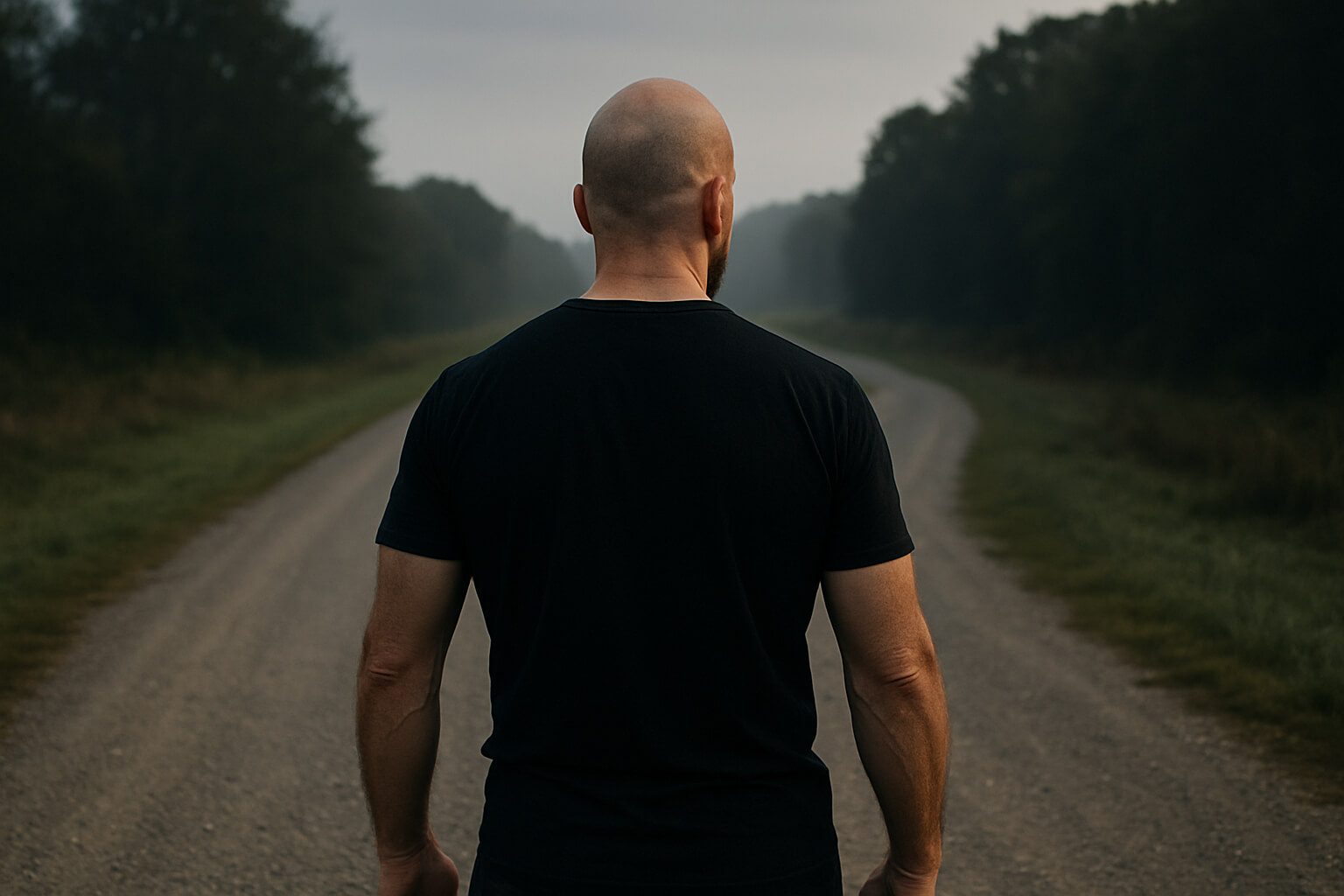
Right now, you’re at the fork in the road. You can sink deeper into the self-loathing. Or you can take one honest breath and ask yourself how to get back on track.
That’s not a question for perfect men. It’s the question broken men ask when they’re ready to stop staying broken. It’s not about hype. It’s not about motivation. It’s about choice.
You’re not disqualified because you slipped. You’re only disqualified if you quit.
And you haven’t quit. Not yet. You’re still here, still reading, still hoping there’s a way back. Which means your comeback has already begun. You just have to take the next step.
So what’s the move?
It’s not some grand gesture. You don’t need to run a marathon or fast for 72 hours or clean your whole house or make a three-hour apology video. You just need to make the next right choice.
Brush your teeth.
Put the food down.
Log the calories—even if they’re ugly.
Cancel the Amazon order.
Take the walk.
Say the prayer.
Turn the phone off.
Forgive yourself.
That’s how to get back on track—by doing something that reminds you of who you really are, not who the spiral says you are.
You may feel tired, but you’re not finished.
You may feel lost, but you’re not beyond recovery.
You may have slipped, but you haven’t spiraled—not if you stop now.
Stand up.
Even if your legs are shaking.
Even if your mind is screaming.
Even if part of you doesn’t believe in yourself yet.
Stand up anyway.
Because you’re not done.
You’re becoming.
Getting Back on Track Starts with Practice, Not Perfection
One of the biggest lies we believe about discipline is that it’s reserved for the perfect. That to be “disciplined,” you need to be flawless. Never miss. Never slip. Never need to start over. But real discipline—the kind that actually lasts—isn’t built on perfection. It’s built on recovery. On the quiet, gritty choice to keep going even when the streak is broken, the plan gets messy, or your effort didn’t match your expectations.
That’s what I’ve learned the hard way: your strength isn’t proven by your best day. It’s proven by what you do on your worst one. You don’t build confidence by hitting every target. You build it by refusing to stay down when you miss. You build it in the small moments—the ones nobody sees—when you mess up, recognize it, and choose not to throw the whole thing away.
That’s how trust grows.
That’s how discipline stops being hype and starts becoming who you are.
If you want to know how to get back on track, here’s the answer: practice. Not punishment. Not perfection. Practice. Showing up again after a missed workout. Logging your meals after an off-plan day. Re-centering after you blew the budget. Speaking kindly to yourself after the shame spiral starts to whisper. These are not signs that you’re failing—they’re signs that you’re fighting.
That mindset started for me with one small, easily-overlooked habit. This post explains how brushing my teeth every day became the foundation for building real discipline.
Think about it. When have you felt most proud of yourself? Was it after a flawless week with perfect macros and zero mistakes? Or was it after the day you felt like quitting—but didn’t? We admire people not because they never fall, but because they get back up. They don’t stay in the pit. They climb out. They practice. And over time, that practice becomes power.
You’re not practicing to be perfect.
You’re practicing to become possible.
To prove, one decision at a time, that you are becoming the kind of man who doesn’t quit. That you are someone who chooses growth over guilt. That you are becoming someone worth following—someone your kids, your wife, your friends, and your future self can be proud of.
So give yourself permission to be in process. Let the comeback mean more than the slip. And keep practicing.
Because that’s how to get back on track—one imperfect, courageous decision at a time.
You’re One Choice Away from Getting Back on Track
It’s easy to talk about being “off track” like it’s a place you’ve wandered into. Like you’re lost somewhere and need to navigate your way back through some complicated maze. But that’s not how this works. Being off track isn’t a destination—it’s a decision. Just like getting back on track isn’t a journey. It’s a choice.
You don’t need to wait until Monday. You don’t need to overhaul your life or find the perfect plan. You don’t need to feel motivated or inspired. All you need is one decision—one small act of alignment with the man you’ve already decided to become. That’s it.
You brush your teeth. You drink a glass of water. You close the pantry. You turn off the screen. You log the next meal. You go for the walk. You pray. You breathe. You forgive.
And just like that—you’re back on track.
Not because everything’s fixed. But because you interrupted the pattern. You took your power back. You made a move instead of marinating in guilt. That’s where real strength lives. Not in some future version of you with perfect streaks and a flawless system—but in the man who makes the next right choice. Right here. Right now.
You want to know how to get back on track? This is it. It’s not a restart. It’s not a reset. It’s a return.
And if you need help building that return into a daily rhythm, I’ve created something for you.
It’s called the Start Strong 31-Day Devotional for Men—and it’s completely free. Each day gives you Scripture, a short reflection, and a simple challenge to help you strengthen your mindset, sharpen your focus, and walk in daily discipline with God at the center.
You don’t need perfect days. You need powerful direction.
Download the free Start Strong devotional here.
Because you’re not stuck. You’re one move away.
So make it.
Choose well.
And start strong.



0 Comments