
Table of Contents
The Unexpected Setback
I didn’t fall off a cliff. I didn’t spiral or self-destruct. But something shifted—and I knew it.
It was one of those quiet failures that sneaks up on you. A few skipped routines. A few compromises I justified in the name of being “tired” or “busy.” One day, I looked up and realized I wasn’t moving forward anymore. I was coasting. And deep down, I knew it.
It wasn’t about the diet. It wasn’t about fitness. It was about the standard I set for myself—and the fact that I was now letting it slide.
You ever feel that?
Not full-on failure. Not rock bottom.
Just that gnawing awareness that you’ve drifted from the man you’re supposed to be?
That’s where I found myself.
Not wrecked.
But disengaged.
And here’s the truth most men won’t say out loud:
Slipping isn’t the real problem.
It’s what the slip exposes.
The softness. The hesitation. The comfort that crept in and started to take over without you noticing.
What hit me harder than the slip itself was what it revealed underneath.
I wasn’t leading myself the way I claimed to be.
And that realization—that quiet gut-punch of conviction—is what forced me to ask the real question:
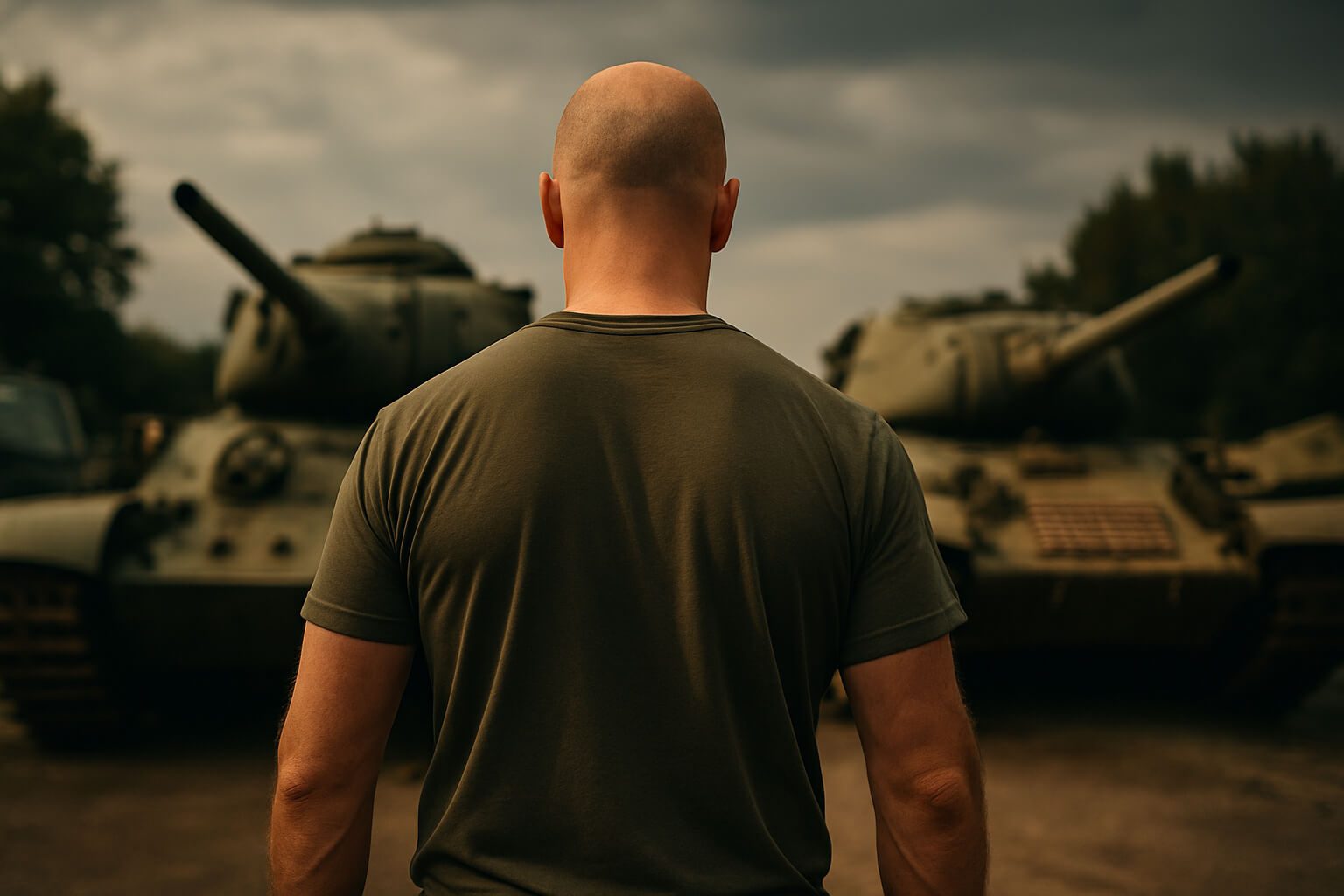
Am I still in the fight, or just wearing the uniform?
What Most Men Get Wrong About Discipline
We act like discipline is black and white.
You either did it perfectly—or you blew it.
One misstep, and we stamp ourselves with the label: “I’m undisciplined.”
Like the whole mission’s a wash.
But that’s not discipline. That’s pride dressed up as toughness.
We confuse masculinity with perfection. We think if we miss a day, eat the wrong thing, skip the gym, or blow up in a moment of weakness—then we’re out of the fight.
Done.
Disqualified.
But that mindset isn’t masculine. It’s fragile.
Discipline isn’t about doing it all right.
It’s about doing the right thing again—even after you just messed it up.
The men I respect? They don’t pretend to be perfect.
They just don’t stay down.
They reset faster.
They carry the weight even when it’s uncomfortable.
They understand this: falling doesn’t end the fight—quitting does.
Here’s the truth most guys never hear:
You don’t need more motivation.
You need a better definition.
Discipline is consistency over time—not performance under pressure.
It’s what you build when you keep showing up, even when you don’t feel like it. Even when it’s boring. Even when you don’t see results right away.
It’s that silent decision you make in the dark:
I’m still in the fight.
You’re not weak because you slipped. You’re weak if you let the slip rewrite your identity. This isn’t about ego. This is about resolve. And once you get that right in your head, the way forward gets clearer.
My Military Training and the Flawed Lesson It Taught
When I first joined the military, our early training was brutal—but not in the way you’d think.
We used these laser-based systems—like high-tech laser tag. Sensors strapped to your body. Get hit once—anywhere—and the system called you dead.
Didn’t matter if it was your arm, your foot, or your helmet.
One shot. Game over.
It drilled one message into your brain: If you get hit, you’re done.
At the time, it made sense. Clear rules. High stakes.
But that training created a dangerous mindset—because real combat doesn’t work like that.
When guys got into actual firefights, some of them got wounded… and gave up.
Not because their body couldn’t keep going—but because their mind already had the funeral.
They’d been trained to die the moment they took a hit.
So they did.
It wasn’t a physical defeat. It was a psychological one.
And the government eventually realized the mistake.
But I’ll be real with you: that kind of wiring doesn’t just disappear.
It sticks.
And for years, I carried that same mindset into life outside the military.
Into fitness.
Into parenting.
Into business.
Into faith.
One mistake? I’d start questioning everything.
One failure? I’d entertain the idea that maybe I wasn’t built for this.
And just like that… I’d start pulling myself out of the fight.
Not because I couldn’t keep going—but because I believed the lie that one bad hit meant I didn’t belong on the battlefield anymore.
But then everything changed.
The Mindset Shift That Saved Lives
Eventually, the military realized their training was costing lives.
They scrapped the laser systems and replaced them with something more raw—sim rounds.
Paintball-style bullets fired from real weapons. You still got hit. You still felt it. But here’s the difference:
Getting hit didn’t mean you were dead.
The only way you were out was if someone told you you were out.
That changed everything.
Guys started pushing harder.
They’d take a round to the leg—and keep moving.
Catch one in the arm—still pressing forward.
Because the new rule was clear:
You’re still in the fight until someone says otherwise.
That shift in mindset saved lives.
It trained men to override pain with purpose.
To stop assuming the worst.
To stop letting the first failure become the last.
And I’ve never forgotten that.
Because life works the same way.
We take hits—bad choices, setbacks, failures, missed goals.
And too many of us treat that as a sign we’re done.
But here’s the truth:
You’re still breathing, so you’re still in the fight.
That mistake you made? That wasn’t the end.
That missed goal? That doesn’t define you.
That voice in your head whispering “maybe I’m not built for this”? It’s lying.
Pain isn’t permission to quit. It’s a call to dig deeper.
To push forward.
To prove—to yourself and to God—that you don’t fold when life stings.
You get back up. You lock back in.
Because the mission’s not over—and neither are you.
Failure in Civilian Life: Same Pattern, Same Temptation
When I left the military, I thought the fight was behind me.
No more battlefield. No more threats. No more pressure to perform in life-or-death scenarios.
But then life kept swinging.
It didn’t come with bullets—but with bills. With long days and short tempers. With unmet goals and broken promises I made to myself.
And I started seeing the same pattern:
One misstep and my brain whispered the same old lie—“You’re done.”
Slip on a diet? “You blew it.”
Miss a few workouts? “Might as well quit.”
Lose focus spiritually? “You’re not who you thought you were.”
That voice didn’t retire just because I did.
It followed me into boardrooms, living rooms, and grocery store parking lots.
And here’s what hit me:
The war never really stopped. It just changed landscapes.
In the military, failure felt like death.
Out here? It still feels like death—just slower.
The death of momentum. The death of progress. The death of belief in yourself.
I’ve had slip-ups that didn’t just knock me off my plan—they knocked the wind out of my identity.
That’s the real danger.
Not the failure itself, but the meaning we attach to it.
The lie that says, “Because you fell, you’re finished.”
But that’s the same mindset we were retrained to reject in combat.
You’re still in the fight—even when no one’s shouting orders.
Civilian life might look safer.
But the battle?
It’s just as real.
And it still demands a warrior’s response.
The Discipline That Actually Lasts
Real discipline isn’t about never slipping.
It’s about how fast you stand back up.
Too many men think discipline means perfection—flawless execution, spotless streaks, never missing a rep, a step, or a commitment. That sounds tough. But it’s actually weak. Because it breaks the moment life punches you in the mouth.
Real strength isn’t in never falling. It’s in how quickly you rise.
Think about it like this:
If you’re in a fight and take a punch, what matters most isn’t whether you got hit.
It’s whether you let it stop you—or fuel you.
That’s what lasting discipline is.
It’s recovery speed. It’s the muscle memory that says, “Yeah, that hurt—but I’m not done.” After a failure, you don’t start from zero. You start from experience. From wisdom. From pain that taught you something—if you’re man enough to let it.
Discipline isn’t a record. It’s a reflex. The guy who’s never fallen isn’t strong—he’s untested. The man who’s been knocked down, bloodied, and bruised… and still laces up his boots again?
That man is dangerous. That’s the kind of discipline I’m chasing. Not polished. Not pretty. But forged in setbacks.
You want to stay in the fight? Then stop trying to be perfect. And start being relentless.
Because the men who last are the ones who keep moving forward—scarred, maybe—but never surrendered.
Faith, Obedience, and the Purpose Behind the Fight
Here’s the truth most men avoid:
God doesn’t care about your perfect streak.
He cares about your obedience—especially after you fall.
That’s what separates religious performance from real faith.
You can memorize verses, go to church, say all the right things—but if you tap out the moment life hits hard, what does it say about your foundation?
When I look back at my own setbacks—whether diet, discipline, or deeper stuff—it wasn’t just about self-control. It was about trust. Did I believe that God still had purpose for me even after I messed up?
Because if I did… I’d get back up.
Not for my own pride.
Not to prove something.
But to honor the One who gave me breath in the first place.
“I have fought the good fight, I have finished the race, I have kept the faith.”
That verse isn’t about winning. It’s about staying in the fight.
Ephesians 6 doesn’t tell us to go out unarmed—it says to put on the full armor of God. That means He expects battle. He expects hits. But He also equips you to stand.
And Luke 16:10?
“Whoever can be trusted with very little can also be trusted with much.”
If you can’t be faithful after a slip… why should you be trusted with more?
This whole journey—discipline, struggle, forward motion—it’s not just about becoming a better man. It’s about becoming a more faithful one.
You’re not fighting alone. But you do have to fight. So stop measuring your streak. Start measuring your surrender.
And let obedience be the thing that keeps you swinging.
You’re Still in the Fight—Now Act Like It
Let me make this simple. If you slipped, so what. You’re not dead. You’re not done. You’re still in the fight—now act like it.
You don’t need to wallow in guilt. You don’t need to spiral. You sure as hell don’t need to give up. What you need is clarity.
You got hit? Welcome to the fight. Everybody gets hit. But only warriors keep moving.
This is your permission to drop the shame, recalibrate, and get your boots back under you.
Not for perfection. Not for applause. But because there’s still ground to take—and it won’t conquer itself.
Whatever it was—diet, habits, fatherhood, faith, fitness, your marriage, your mission—it’s not too far gone.
But it will be… if you stay down. Get up. Move forward. Fight smarter.
God isn’t keeping a scoreboard. He’s watching your response.
So don’t apologize your way through life.
Don’t let guilt waste your energy.
Action > Apology.
Grit > Guilt.
You’re still breathing?
Then your story’s still being written. Write the next chapter like a man who knows what’s at stake.
You’re still in the fight. So pick up your gear—and move.
Stay in the Fight – Reflection & Action Guide
You’ve read the story.
You’ve seen the battle.
Now it’s time to step into your own.
Don’t just scroll past this moment.
Slow down. Reflect. Then move.
Ask yourself these hard-hitting questions—not for guilt, but for growth:
1. Where have I let a small setback define my identity instead of refine my discipline?
Be honest. What failure still whispers “you’re done” even though you’re not?
2. What’s one area of my life where I’m mistaking pain for a permission slip to quit?
Is it your fitness? Your marriage? Your calling? What hit you that made you stall?
3. If God is still giving me breath, what’s the next obedient step I’ve been avoiding?
Forget the big leap. What’s the next faithful move you know you need to make?
4. Am I training myself to quit or to recover?
Your response to failure is training. What habits are you reinforcing?
5. What does “still in the fight” look like for me today?
Don’t get abstract. Get specific. Write it down. Name it. Do it.
Wanna go further? Check out this FREE 31 day discipline devotion!
Use it for your quiet time, journaling, or even with a men’s group.
Remember:
You don’t need to be perfect.
You just need to fight like you know Who you’re fighting for.



0 Comments