
Table of Contents
People think strength is loud.
It looks like shouting orders, lifting heavy, making bold moves.
But for me, the hardest and most courageous thing I’ve ever done didn’t look like any of that.
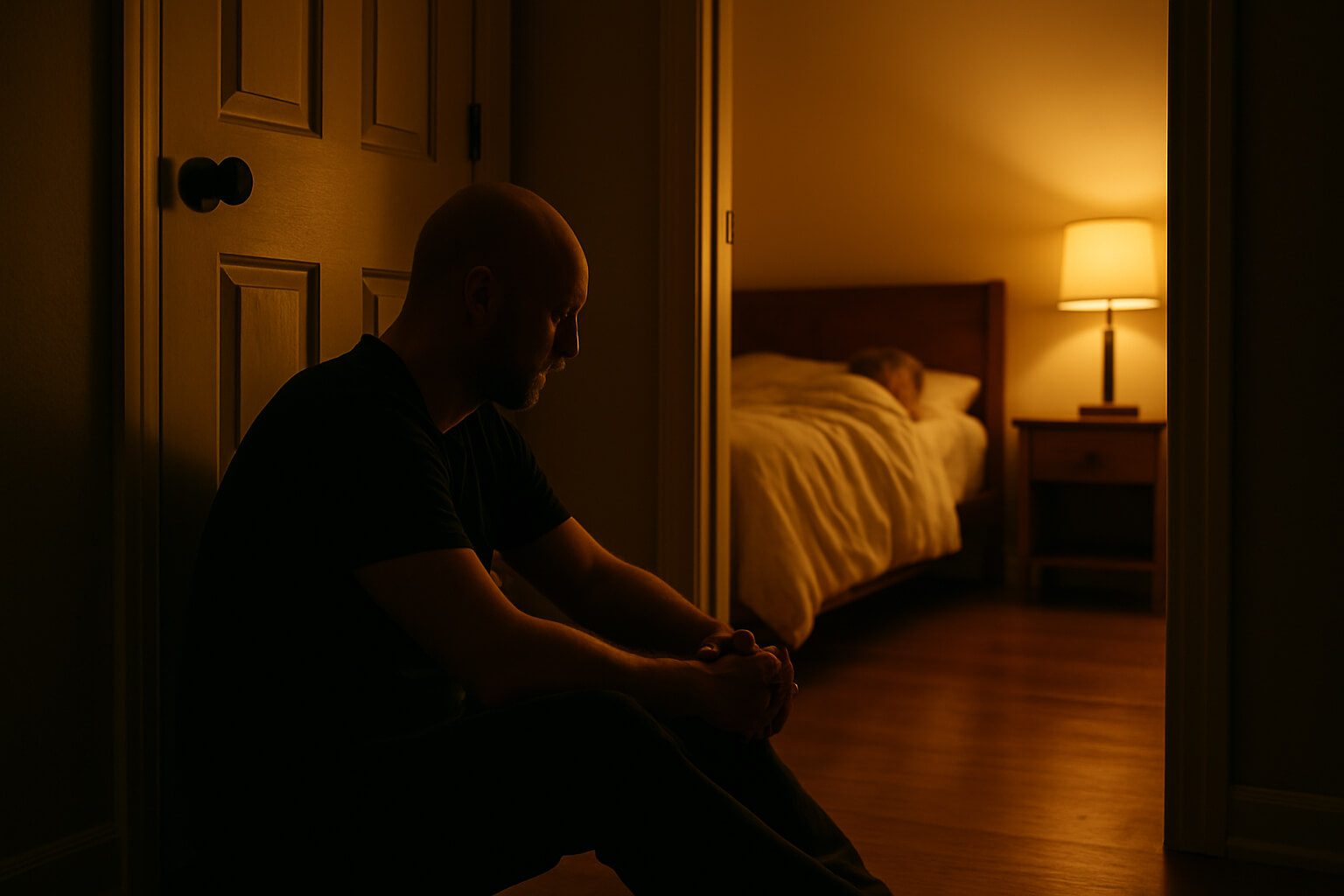
It looked like staying.
Staying when I wanted to disappear.
Staying when no one noticed.
Staying when everything in me said, “Just shut down. Start over. Escape.”
For years, I thought I was good at staying—because I didn’t leave physically. I kept showing up. I kept doing my job. I wore that like a badge. But what I didn’t see back then was that leaving isn’t always about your feet. Sometimes it’s your heart. Your mind. Your presence.
And that kind of staying—the emotional, spiritual kind—is what I had to learn the hard way.
This is why I always shut down emotionally.
Not because I didn’t care.
But because I didn’t know how to stay without feeling like I’d drown.
Overcoming childhood trauma as a Christian man hasn’t meant fixing everything.
It’s meant learning to remain.
To resist the pull of detachment.
To keep showing up when disappearing would be easier.
Not because I’m a hero.
But because I finally understood that faith isn’t about performing.
It’s about presence.
And in a world full of men chasing exits, choosing to stay has become one of the most Christlike, countercultural things I’ve ever done.
Why I Thought I Wasn’t the Kind Who Shut Down
Growing up, I told myself one story: I was the one who stayed.
My mom left. My biological father was never around. My family fractured in ways I couldn’t make sense of. But me? I stayed. I didn’t leave. I didn’t abandon anyone. And I wore that like a badge—a quiet, private kind of righteousness I carried through the chaos.
Every time I felt overlooked or misunderstood, I leaned on that narrative. At least I stayed. At least I didn’t run.
But that wasn’t the whole truth.
Because even though I didn’t run physically, I ran in every other way.
I ran emotionally—pulling back when things got too intense.
I ran mentally—checking out of conversations that got too real.
I ran spiritually—distancing myself from God when His silence hurt more than I wanted to admit.
My feet never moved. But everything else in me was gone.
And I got good at it—so good that people thought I was steady.
Quiet. Reliable. Unshakable.
But the truth is, what looked like steadiness was actually emotional escape.
It was survival.
It was why I always shut down emotionally—even when I thought I was showing up.
Because I hadn’t been taught how to stay.
I’d only been taught how to endure.
Real staying isn’t just about presence—it’s about connection.
It’s about being emotionally and spiritually open. Available. Invested.
And back then, I wasn’t any of those things.
I thought I never ran.
But running had become my default—I just didn’t recognize it.
Because I had confused standing still with staying.
And I didn’t yet know what staying actually looked like.
The One Time I Actually Walked Out—And What It Revealed About Why I Shut Down
I used to be proud of the fact that I never ran.
I stayed.
I didn’t walk out.
I didn’t disappear like so many others had.
But that’s not entirely true.
There was one night—early in my marriage—when I did leave.
We had been fighting. Tension had been building for weeks, mostly because of me. I didn’t have the tools to communicate. I didn’t know how to say what I felt—honestly, I didn’t even know what I was feeling. Mix in alcohol, pride, and a pile of unprocessed pain, and things boiled over fast.
In the middle of it all, I left.
I didn’t slam the door. I didn’t raise my voice.
I just quietly grabbed my coat, left my phone on the counter—on purpose—and walked out.
I didn’t want to be called.
I didn’t want to be reached.
I didn’t want to be found.
I told myself I just needed space. But the truth? I wanted to disappear.
I wanted her to feel the distance.
To feel the ache I didn’t know how to name.
I walked for miles. No destination. Just the next block. The next gas station. The next stretch of silence that didn’t require me to feel, explain, or stay.
Meanwhile, my wife was on the verge of calling the police.
She had called family.
She was dialing 911 when I finally walked back through the door.
She didn’t yell. She didn’t fall apart.
She just said, “Don’t ever do that again.”
And I never have.
But that night wasn’t just about one argument.
It was about every unspoken rule I had absorbed growing up—every belief that said disappearing was safer than feeling. That silence was control. That emotional shutdown was strength.
That night, I didn’t just leave the house.
I defaulted to everything I had been taught.
And that moment became one more reason why I always shut down emotionally—because deep down, I thought staying was weakness and distance was power.
How Childhood Taught Me to Shut Down Emotionally
I didn’t grow up watching people stay.
My biological dad left before I was born. Whatever the reason, whatever the story—I grew up in the shadow of a man I never met. A name without a presence. A blank space that nobody talked about, but that I carried anyway.
My mom walked out when I was in middle school. She said she was leaving to build a better life for us. Maybe she believed that. Maybe it’s even true. But all I knew was she was gone. The details faded over time, but the ache stayed sharp.
My stepdad stayed physically—but only in the most literal sense.
He was in the house.
But emotionally? Mentally? Spiritually? He was miles away.
Sometimes high. Sometimes raging. Sometimes completely checked out.
Either way, I was on my own.
Nobody taught me how to stay—not really.
They taught me how to disappear.
How to justify leaving.
How to self-protect by shutting down.
I didn’t learn repair.
I didn’t learn reconciliation.
I learned silence. Shut doors. Cold shoulders. I learned that when things got complicated, you don’t lean in—you retreat.
And that’s why I always shut down emotionally.
Even when I swore I’d be different. Even when I convinced myself I was the one who stayed—I was still following their blueprint.
Still going dark when things got vulnerable.
Still bracing for pain.
Still avoiding connection the moment it got real.
That’s the truth about generational cycles:
Sometimes the inheritance isn’t words—it’s reflexes.
It’s instinct. It’s absence handed down like a script.
Learning to stay hasn’t come from defiance.
It’s come from awareness.
From recognizing those emotional shortcuts and choosing—moment by moment—not to take them anymore.
Staying doesn’t come naturally when you’ve been trained to leave.
But with God’s help, it’s becoming possible.
How I Shut Down Without Anyone Noticing
Not all running looks like slamming a door.
Some of it looks like sitting perfectly still—just gone behind the eyes.
That’s the kind of disappearing I mastered.
I didn’t recognize it at first.
I thought I was just laid-back. Easygoing.
Low drama. Calm under pressure.
But what I was really doing was disconnecting.
Checking out before anything could get too close.
Before I could feel too much.
If a conversation started heading toward something real—something vulnerable or uncomfortable—I’d change the subject. Make a joke. Shrug it off. Go quiet.
Anything to avoid being exposed.
It wasn’t strategy. It was instinct.
Some people fight when they feel unsafe.
Some people run.
I vanished.
Emotionally, spiritually, relationally—I learned how to evacuate without leaving the room. I could sit at a table, nod at the right times, and still be a hundred miles away in my head.
That’s why I always shut down emotionally.
Not because I didn’t care.
But because I didn’t know how to stay.
I thought feeling made me weak.
I thought strength meant silence. Composure. Control.
But here’s what I know now:
That shutdown reflex? It’s not strength.
It’s fear.
It’s self-protection disguised as calm.
And for a long time, it was my default.
Not because I didn’t want connection—
But because connection required risk.
It meant I could be misunderstood. Rejected. Pitied.
And I couldn’t bear any of that.
So I opted out quietly. Not with anger or exit.
But with absence.
The people closest to me didn’t always know I was gone.
But they felt it.
That invisible gap. That sense that something didn’t reach all the way through.
That’s what emotional shutdown leaves behind:
A body in the room.
But a heart out of reach.
And over time, that kind of disappearing costs more than it protects.
The Christmas Party I Don’t Remember
A couple of years ago, we were supposed to be celebrating.
It was my company’s Christmas party. My wife and I showed up together. We smiled, made conversation, laughed at the right times. From the outside, everything looked fine.
But inside?
I was gone.
We had been in a rough spot leading up to that night—not a blowout, not a crisis, just that slow, quiet kind of disconnection that creeps in and starts to rot the foundation. And instead of facing it, I made a decision:
Pretend it’s not there.
So I drank.
I started early. First beer before noon. I didn’t count the rest—I just kept going.
I told myself I was relaxing.
Trying to enjoy the night.
But what I was really doing was running.
Running from the tension.
Running from the emotional responsibility.
Running from my own shame.
I didn’t want to deal with what was broken.
I just wanted to feel okay—even if it was fake.
I don’t remember everything I said that night.
But I remember the look on my wife’s face.
I remember the ache in my stomach the next morning.
I remember realizing that I hadn’t loosened up—I had shut down.
That’s why I always shut down emotionally: because staying present felt too hard.
Because pretending was easier than vulnerability.
Because numbing was easier than facing what I didn’t want to admit.
That night wasn’t about alcohol.
It was about escape.
I wasn’t the fun guy at the party.
I was the guy trying to disappear in plain sight.
And what looked like celebration on the outside?
It was just one more moment where I chose disconnection over courage.
Silence over truth.
A mask over intimacy.
And the worst part?
I didn’t just hurt myself.
I hurt her, too.
The Day I Realized I Hadn’t Dealt With Anything
For most of my life, I thought I was good at dealing with things.
My mom passed away? I didn’t fall apart.
I just kept going.
My dad got cancer? Same response.
I stayed steady.
Didn’t flinch.
Made a joke. Moved on.
I called it strength.
But it wasn’t.
What I called “dealing with it” was really just avoiding it.
Burying it.
Silencing the parts of myself that didn’t know how to grieve, or rage, or question without feeling like I might come undone.
So I didn’t come undone.
I came unfeeling.
Detached.
Distant.
Still moving forward on the outside while whole parts of me stayed frozen in the pain I never acknowledged.
That’s why I always shut down emotionally—because I thought that’s what strong men did.
They didn’t cry.
They didn’t get wrecked.
They stayed cool. In control. Numb, if necessary.
But you can only outrun what’s inside you for so long.
Eventually, it started catching up with me.
Not through explosions—but through quiet erosion.
Irritability. Numbness. Distance I couldn’t explain.
I wasn’t falling apart. I was fading.
It felt like my silence was cracking.
Like everything I had buried was still alive—just waiting for a chance to surface.
And that was the day I had to be honest:
I hadn’t dealt with anything.
I had bypassed it. Outmuscled it. Disguised it as composure.
But healing doesn’t happen in hiding.
And the longer I stayed emotionally shut down, the more disconnected I became—not just from pain, but from joy. From peace. From God. From the people who loved me.
Because of the Lord’s great love we are not consumed, for his compassions never fail. They are new every morning; great is your faithfulness. (Lamentations 3:22–23)
When Escaping Felt Holy
I didn’t just run from emotions.
I ran from God, too.
It wasn’t some loud act of rebellion.
I didn’t denounce my faith or walk away from church.
It was quieter than that—subtle. Acceptable.
Spiritual, even.
I told myself I still believed.
I still wore the label.
But my relationship with God had gone surface-level.
Dutiful. Detached.
I had questions I didn’t want to ask.
Anger I didn’t want to admit.
Confusion I didn’t know how to process.
And instead of wrestling through any of it, I distanced myself.
I stopped praying with honesty.
I stopped reading with expectation.
I stopped listening altogether.
I thought I was protecting my faith by not poking too hard.
But really, I was starving it.
That’s why I always shut down emotionally—because even with God, I was afraid of what might surface if I actually opened up.
What if He didn’t answer?
What if He did?
Escaping didn’t feel like rebellion.
It felt like survival.
I kept my faith close enough to feel safe, but far enough to stay guarded.
I didn’t want to risk confrontation—either with God, or with the parts of myself I had spent decades hiding.
But that kind of faith doesn’t bring peace.
It brings exhaustion.
Because you’re still carrying the ache.
Still weighed down by the questions you’re afraid to ask.
And deep down, I knew:
God wasn’t afraid of any of it.
I was.
What looked like reverence was really avoidance.
What felt like faith was just fear in disguise.
And it wasn’t until I stopped pretending I was okay with the distance that I realized something had to change.
I didn’t want to run anymore.
The Slow Return to Presence
Presence didn’t come naturally to me.
It wasn’t some awakening where I suddenly became the world’s most engaged husband or dad.
It came slow.
Awkward.
Uneven.
At first, it felt foreign—
Sitting with my kids when I was overwhelmed.
Staying in the conversation with my wife when everything in me wanted to shut down, change the subject, or quietly vanish.
My reflexes still whispered,
Withdraw. Numb. Avoid.
That’s why I always shut down emotionally—because it felt safer to disappear than to stay in the tension.
But I started choosing something different.
One moment at a time.
And no, I didn’t always get it right.
I still drifted off mentally while people were talking.
Still found myself defaulting to “fix it” mode.
Still glazed over emotionally when something felt too big to hold.
But little by little, I started to stay.
I started to notice.
I started to listen—not just with my ears, but with my full posture.
Sometimes that meant holding space for a hard question.
Sometimes it meant saying, “I don’t know what to say, but I’m here.”
Other times, it meant asking myself, Why do I want to escape this moment?
And staying long enough to find the answer.
Presence stopped being about doing it perfectly.
It became about not leaving.
Not emotionally.
Not spiritually.
Not mentally.
And slowly, staying became its own kind of healing.
Not because it felt good.
But because it built trust.
With my wife.
With my kids.
With myself.
Every time I didn’t shut down, I sent a message to my own heart:
I’m still here. And I’m not going anywhere.
What Obedience Looks Like Now
These days, staying looks a little different.
It looks like waking up before everyone else to write a blog no one’s asking for.
It looks like turning on a camera with no guarantee anyone will watch.
It looks like opening my Bible—not to check a box, but to stay grounded when everything in me wants to drift.
Obedience isn’t always dramatic.
It’s not about applause or platforms.
For me, it’s about faithfulness—especially in obscurity.
Faithfulness in the little things.
Faithfulness to the call God placed on my life, even when the fruit doesn’t come fast.
There was a time when I needed performance to feel like progress.
When I needed hustle to prove I mattered.
But not anymore.
Now, it’s about staying in alignment with what God is building in me—even when no one sees it but Him.
Sometimes obedience feels like posting a video and hearing crickets.
Sometimes it feels like rereading a verse three times because your mind won’t settle.
But it still matters.
Because it’s not about the outcome anymore.
It’s about the offering.
And every time I show up—without fanfare, without results—I become someone I never thought I’d be:
Consistent.
Rooted.
Steady.
Not chasing flashes of greatness.
Just chasing faithfulness.
And that’s where God keeps meeting me.
Staying Isn’t Easy—It’s Evidence
I used to think staying meant you had it all figured out.
That men who stayed were the ones who didn’t struggle.
But now I know better.
Staying doesn’t mean you’re healed.
It means you’ve stopped running.
I still catch myself drifting.
I still feel the pull to check out, to disconnect, to disappear in the ways I’ve practiced all my life.
That’s why I always shut down emotionally—because that was my wiring.
My reflex.
But now, I notice it.
I name it.
And I come back.
That’s the real work.
Not perfection.
Return.
Every time I choose presence over withdrawal, truth over avoidance, grace over defense—
I’m putting down roots.
And it’s not easy.
Staying rarely is.
It takes more strength to sit in the discomfort than to run from it.
More faith to wait on God than to try to fix everything myself.
But I know what leaving does.
I’ve seen the scars it leaves behind.
I’ve carried them myself.
And I don’t want to pass that legacy on.
So I stay.
Not because I’ve mastered it—
But because I trust God is still working in it.
In the quiet.
In the unseen.
In the daily decision to show up again.
Staying isn’t flashy.
But it’s evidence.
Evidence that healing is real.
That faith is growing.
That something deep and holy is taking root.
And for me, that’s enough.
Want to Keep Growing?
If me talking about why I always shut down emotionally resonated with you, don’t walk away alone.
Subscribe to my email list and I’ll send you weekly encouragement, hard-won lessons, and honest reflections for Christian men learning how to show up, stay present, and stop running.
Because the work doesn’t end here.
But you don’t have to do it alone.



0 Comments