
Table of Contents
How to Become More Disciplined Starts Smaller Than You Think
There wasn’t a dramatic moment. No rock bottom. No big declaration that I was turning my life around. Just a quiet moment of honesty—a simple, tired realization that I was sick of breaking promises to myself.
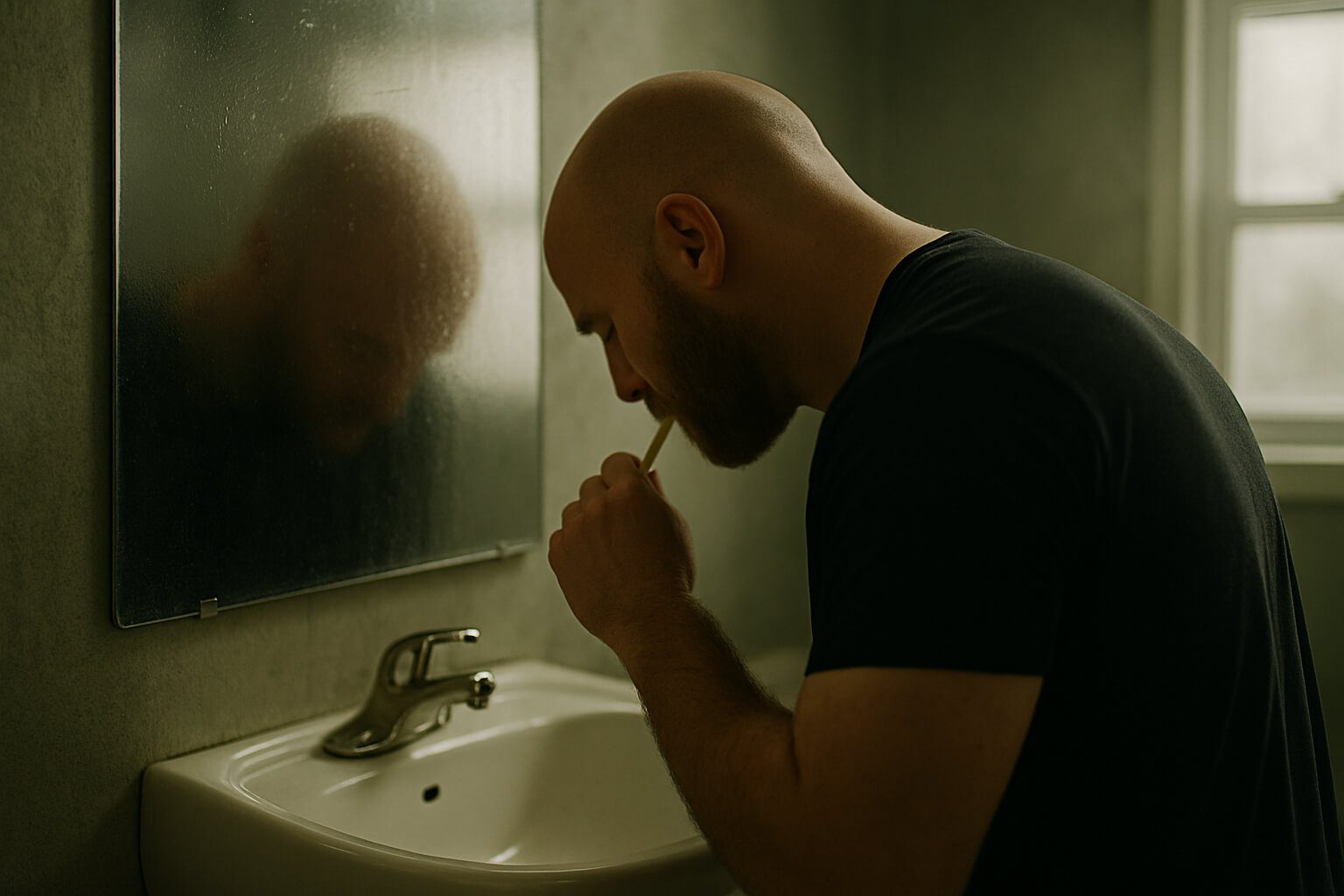
I was brushing my teeth… or rather, not brushing my teeth. Skipping days. Telling myself I’d do it later. And every time I skipped it, it wasn’t just bad breath or the threat of cavities that bothered me. It was the deeper frustration of knowing I wasn’t showing up for myself in the smallest way possible.
I wasn’t training for a marathon. I wasn’t tackling some 30-day challenge. I was just a grown man, staring at a toothbrush on the bathroom counter and realizing that I either needed to change—or keep lying to myself about who I was becoming.
And in that moment, brushing my teeth wasn’t about hygiene. It was about integrity. It was about doing something small because I said I would. Because I needed to prove—at least to myself—that I could keep a promise when no one was watching.
That was it. No hype. No streaks. No journal entries or countdown apps. Just one small act of defiance against my own inconsistency.
If you’re trying to figure out how to become more disciplined, don’t look for a massive overhaul. Start with what’s right in front of you. Sometimes, we don’t need a breakthrough. Sometimes we’re just tired of feeling stuck—and we’re ready to prove, in two quiet minutes at the bathroom sink, that we’re capable of showing up.
That was my starting line.
And it began with a toothbrush.
Why Small Habits Are the Secret to How You Become More Disciplined
There’s a verse in Luke that says, “Whoever is faithful with very little will also be faithful with much.” I’ve heard it for years. Quoted it. Nodded along. But it didn’t really land until I started brushing my teeth every day.
It sounds ridiculous, right? Faithfulness and flossing? Discipline and a toothbrush?
But that’s the lie most men believe—that big change has to come from big moves. We look for grand gestures, breakthrough moments, or that one perfect Monday morning that launches a whole new life. But if you’re serious about learning how to become more disciplined, here’s the truth most people miss: it starts small. On purpose.
Brushing my teeth became that for me. Not because I wanted praise or because I was chasing some health kick. It was just the one thing I could control. A tiny foothold. A daily anchor in the middle of all the chaos I’d grown used to.
That small habit didn’t make me feel like a hero. But it did make me feel like a man who could keep a promise. And that shift—that identity shift—is what building discipline is really about.
Consistency isn’t built in the big, loud moments. It’s built in the quiet ones. The boring ones. The ones nobody claps for.
I didn’t set out to become “disciplined.” I just didn’t want to be the guy who broke his own word anymore.
And every time I brushed—even when it felt small—I was reinforcing the truth that I could still show up for myself. That’s how you become more disciplined—not by chasing massive change, but by choosing to show up when it’s quiet.
What Chaos Never Taught Me About Discipline
I didn’t grow up in a house with alarms set for school routines. We didn’t have planners or family calendars or quiet rhythms that held the days together. What we had was survival.
And survival doesn’t care about structure.
When everything feels like it’s one crisis away from collapsing, you don’t learn to brush your teeth every day. You learn how to stay out of the way. You learn how to read moods and react fast. You learn how to disappear into the background when things get tense. That’s the kind of “discipline” you pick up in chaos—not the kind that leads to health or structure, but the kind that makes you hypervigilant and exhausted.
So no, I didn’t grow up with habits that built me. I grew up with instincts that protected me. I wasn’t taught how to become more disciplined—I was taught how to survive.
And if that’s your story too, hear me: you’re not broken. You’re not lazy. You just weren’t handed the tools.
But those tools? They can be learned. One of the most powerful tools is repetition. Simple, quiet, non-negotiable repetition. Not because it’s exciting, but because it’s stable. And if you’ve lived in instability long enough, that kind of stability feels like freedom.
Brushing my teeth wasn’t a resolution. It wasn’t hype. It was healing. A small, daily defiance against the unpredictability I came from. A way of reclaiming the day before it claimed me.
Because learning how to become more disciplined isn’t about flipping a switch. It’s about choosing the same small thing over and over again—until the noise of your past starts to quiet.
The First Real Step To Become More Disciplined
When I started brushing my teeth every day, it wasn’t because I’d suddenly found religion in dental hygiene. I wasn’t trying to reinvent myself or become some high-performance version of the man I used to be. I was just tired—tired of being the kind of person who couldn’t follow through on even the smallest commitments.
It wasn’t about becoming “better.” It was about not falling apart.
There was so much in my life I couldn’t control at the time. Old wounds. Emotional storms. Situations I didn’t ask for. Patterns I didn’t know how to break. But brushing? That was one thing I could own. One simple act I could do each day that didn’t depend on motivation or mood. One thing that didn’t need fixing or unpacking—it just needed doing.
And oddly enough, that’s when I started learning how to become more disciplined—not through some motivational breakthrough, but through resistance. Not resistance to hardship, but resistance to giving up on myself.
This wasn’t me trying to outrun my past. It was me planting a flag in the ground and saying, “Not today.” Maybe everything else was still shaky. Maybe I didn’t have a grand vision for who I wanted to become. But I knew this much—I didn’t want to keep being the guy who couldn’t keep a promise to himself.
That’s why brushing my teeth mattered. It didn’t replace the chaos, but it resisted it. It was my quiet act of rebellion. A daily protest against the version of me that kept waiting for everything to settle down before making a change.
Because real change doesn’t start when everything gets calm.
It starts when you choose one thing—just one—and say, “This I can do. This I will do. And I’ll do it again tomorrow.”
How to Become More Disciplined—One Small Win at a Time
I didn’t set out to build some perfect morning routine. I wasn’t reading self-help books or watching YouTube videos about how to become more disciplined. I just wanted to be a guy who brushed his teeth every day—and I was starting to become him.
But something surprising happened.
Once that habit stuck, it didn’t stay isolated. It started bleeding into other parts of my day. Without realizing it, brushing my teeth became the trigger for something else—like putting on deodorant. Then taking a shower more regularly. Then making sure I was getting up on time, or journaling, or taking a few minutes to pray before work.
It wasn’t some checklist I was following. It was more like… momentum.
I’d never heard of “habit stacking” back then. That was a term I learned later. But I knew what it felt like to live it. To let one small win give me the confidence to try for another. Not because I felt strong—but because I’d already proved I could show up, just a little.
And that’s a key part of learning how to become more disciplined. You don’t start with willpower or ten new habits all at once. You start with one. You let it take root. And then, almost without trying, it creates space for the next one.
The crazy thing is, most of those habits weren’t even that hard on their own. What made them feel impossible before was the weight of all the chaos I carried. But brushing my teeth gave me a foothold—a tiny crack of stability. And that’s all I needed to start climbing.
It wasn’t glamorous. I wasn’t crushing workouts or launching businesses or overhauling my life. I was brushing, then showering. I was showing up for the tiny things.
And the tiny things were changing me.
How to Become More Disciplined in the Morning
I didn’t brush my teeth at the same time every day. But I did brush them at the same point in my day—right when I was getting ready.
Whether I was working day shift or night shift, whether I woke up at 5:00 AM or 2:00 PM, the cue was always the same: it’s time to start the day. And if I was getting dressed, putting on deodorant, or walking out the door—brushing my teeth was part of that process.
That was the anchor. I tied a new habit to something I was already doing. Not because I read it in a habit book, but because it just made sense. If I was already standing at the sink, already getting ready, it didn’t feel like an extra task. It felt like part of getting ready.
This is one of the most overlooked ways to learn how to become more disciplined. You don’t force new habits into your life—you tuck them into moments that already exist. You let your current routines carry the weight.
Even today, that still holds up. But I’ve noticed something else too—on lazy Saturdays when I stay in pajamas longer than I should, it’s easier for the habit to slip. Not because I’ve unlearned it. But because motion creates momentum.
When my day doesn’t start clean—when I’m not getting dressed or stepping into a rhythm—it’s easier to forget. To drift. To delay.
That’s why anchoring habits to action matters. Habits that stick often grow from things we already do—getting dressed, making coffee, washing our face. We don’t need a new life to build new habits. We just need to find the cracks in our current one where those habits can live.
Because once you anchor something in motion, it starts to carry itself. It becomes part of the flow. And flow is a whole lot easier to maintain than willpower.
The Motivation Spike—and What Happens After
When I first committed to brushing my teeth every day, I hit the ground running. I wasn’t just trying to build a habit—I was trying to make up for years of neglect. Suddenly I was researching the best electric toothbrushes, using floss and water picks, watching videos about proper technique, and doing everything I could to overcompensate for lost time. There was a kind of urgency behind it, like I had something to prove—not to anyone else, but to myself.
That first stretch was fueled by motivation. It felt good to be doing something right. I liked the sensation of clean teeth, the minty freshness, the thought that maybe I could turn things around. Every little step felt like progress. And for a while, I stayed caught up in that momentum. I was “that guy” now—the one who cared, who tried, who didn’t skip the small stuff anymore.
But motivation is a liar if you think it’s going to carry you all the way.
Eventually, the thrill wore off. I stopped watching the videos. The water pick started gathering dust. The novelty of the electric toothbrush faded, and the dopamine hit from doing something new wasn’t there anymore. The hype burned off—and all that was left was the habit itself. No fireworks. No fanfare. Just me, a toothbrush, and a choice.
That’s when I realized something important about how to become more disciplined: you have to plan for the day the motivation dies. You have to decide, in advance, that you’re going to keep showing up even when it doesn’t feel exciting. Even when nobody notices. Even when your mood says “skip it.”
Brushing my teeth stuck not because I stayed excited about it, but because I kept doing it when the excitement faded. And that’s what makes the difference. Hype will start a habit. But only identity will sustain it.
The Power of Visibility
In the early days, one of the most effective things I did wasn’t even that intentional—it was just practical. I left my toothbrush out on the bathroom counter. Right there, in the open. No drawer. No medicine cabinet. No hiding it away neatly like a guest was coming over. It sat next to the sink, staring at me every time I walked in.
And that ended up being powerful.
That little toothbrush became a silent accountability partner. It didn’t blink. It didn’t judge. But it asked a question every time I saw it: Are you doing what you said you’d do? On days when I was tired or distracted or tempted to push it off until later, the simple fact that it was visible made all the difference. I couldn’t forget it—not without deliberately choosing to ignore it. And I didn’t want to be that kind of man anymore. I wanted to follow through.
That’s the power of visibility when you’re figuring out how to become more disciplined. You remove the excuse of “I forgot.” You shrink the gap between intention and action. You bring the goal into the room—literally. And sometimes, that’s enough to get you across the line when willpower is running low.
Over time, something shifted. I didn’t need the toothbrush out anymore to remind me. I still leave it on the counter out of convenience, but the habit has gone deeper than that. The object faded into the background, but the behavior stayed rooted.
That’s when you know something has changed: when the reminder no longer needs to be loud, because the habit is now part of your identity.
You Don’t Need Praise—You Need Proof
Nobody was clapping for me because I started brushing my teeth every day. There were no high-fives, no motivational speeches, no “proud of you” texts. And honestly? That used to bother me. I think part of me expected some kind of validation—like if I finally started doing the right thing, the world would stop and notice.
But it didn’t.
And that turned out to be a gift.
Because instead of chasing praise, I started looking for proof. Quiet, personal proof that what I was doing was actually working. And I found it—slowly, steadily, in ways no one else would have seen.
Dentist visits that used to feel like judgment day started to get easier. The bleeding in my gums stopped. I could get through a cleaning without wincing. One time, I walked out of the chair cavity-free and thought, Is this what normal people feel like? That feeling was new—and it meant more to me than any pat on the back ever could.
Those wins weren’t loud. Nobody else noticed. But I did. And that was enough.
If you’re figuring out how to become more disciplined, this is what you need to know: applause won’t carry you. Results will. Private victories. Small shifts. Subtle signs that you’re not the same man you were yesterday. That’s what builds belief. That’s what builds momentum.
I didn’t need to be praised—I needed to see that I was changing. Not because someone said I could, but because I was living it. One toothbrush stroke at a time.
That’s the kind of motivation that doesn’t fade.
Progress Without End Points
There’s no finish line for brushing your teeth. No grand milestone to hit. No moment where you check the box and say, “I did it.” You just do it—every day—for the rest of your life.
That’s the part nobody talks about when it comes to building habits. We’re conditioned to chase goals with clear endpoints: 30-day challenges, 12-week programs, a target weight, a certain savings amount. And while those structures can be helpful, they come with a hidden flaw. When the challenge ends, the habit often ends with it.
But brushing your teeth? That’s different. You don’t do it for the streak. You don’t do it for applause. You do it because it’s what someone who takes care of themselves does. It’s boring. It’s quiet. It doesn’t come with a highlight reel—but it lasts.
And that’s what makes it powerful.
One of the biggest lessons I’ve learned about how to become more disciplined is this: the most meaningful habits don’t have finish lines. They don’t hinge on hype or big goals. They hinge on identity. They grow roots when you stop trying to “win” and start trying to be—to live like the man you’ve decided to become.
Some of the most important changes you’ll ever make won’t feel like breakthroughs. They won’t give you a rush. They might not even feel impressive while you’re doing them. But they’ll shape your life, quietly and consistently, because you chose to keep showing up.
There’s no celebration at day 100. There’s no badge for hitting year three. But every single time you show up, you’re reinforcing the story: I’m the kind of man who doesn’t quit on himself.
That’s what real discipline looks like.
Close the Gap. Start Small. Start Now.
The truth is, I didn’t get here because I finally found the perfect routine. I didn’t wake up one day and overhaul my entire life. I didn’t become consistent because I discovered some secret system or joined a 5 a.m. club.
I started brushing my teeth.
That’s it.
That was the first promise I kept. And I didn’t keep it because it was impressive—I kept it because I was tired of breaking promises to myself. Tired of being the man who meant well but never followed through. So I picked one thing. One small thing. And I didn’t quit.
That tiny habit, built in silence, started to close the gap between the man I said I wanted to be and the man I actually was.
And you can do the same.
You don’t need a full plan right now. You don’t need the perfect app or a 12-week strategy. You don’t need to wait until Monday. You just need one small thing you can do today—something you can tie to a habit that’s already part of your life.
Brush your teeth when you shower. Pray while the coffee brews. Write one sentence while your computer boots up. It doesn’t matter what it is. What matters is that you choose something—and keep choosing it.
Because you’re not broken.
You’re not weak.
You’re not too far gone.
You’re just one small habit away from momentum.
One promise away from proof.
One decision away from becoming the kind of man who shows up—even in the small things.
Start there.
Start now.
If you want the full backstory behind how brushing my teeth became the foundation for all this, I shared it in this article about building daily discipline. It’s where this journey really began.
Need help getting started?
The Start Strong Devotional was made for moments like this. Short. Simple. Built for men who’ve quit before but are ready to stop starting over.
Click here to get the FREE Start Strong devotion now.
Because showing up—especially in the small things—isn’t just a decision. It’s a direction.



0 Comments