
Table of Contents
The Day Everything Changed
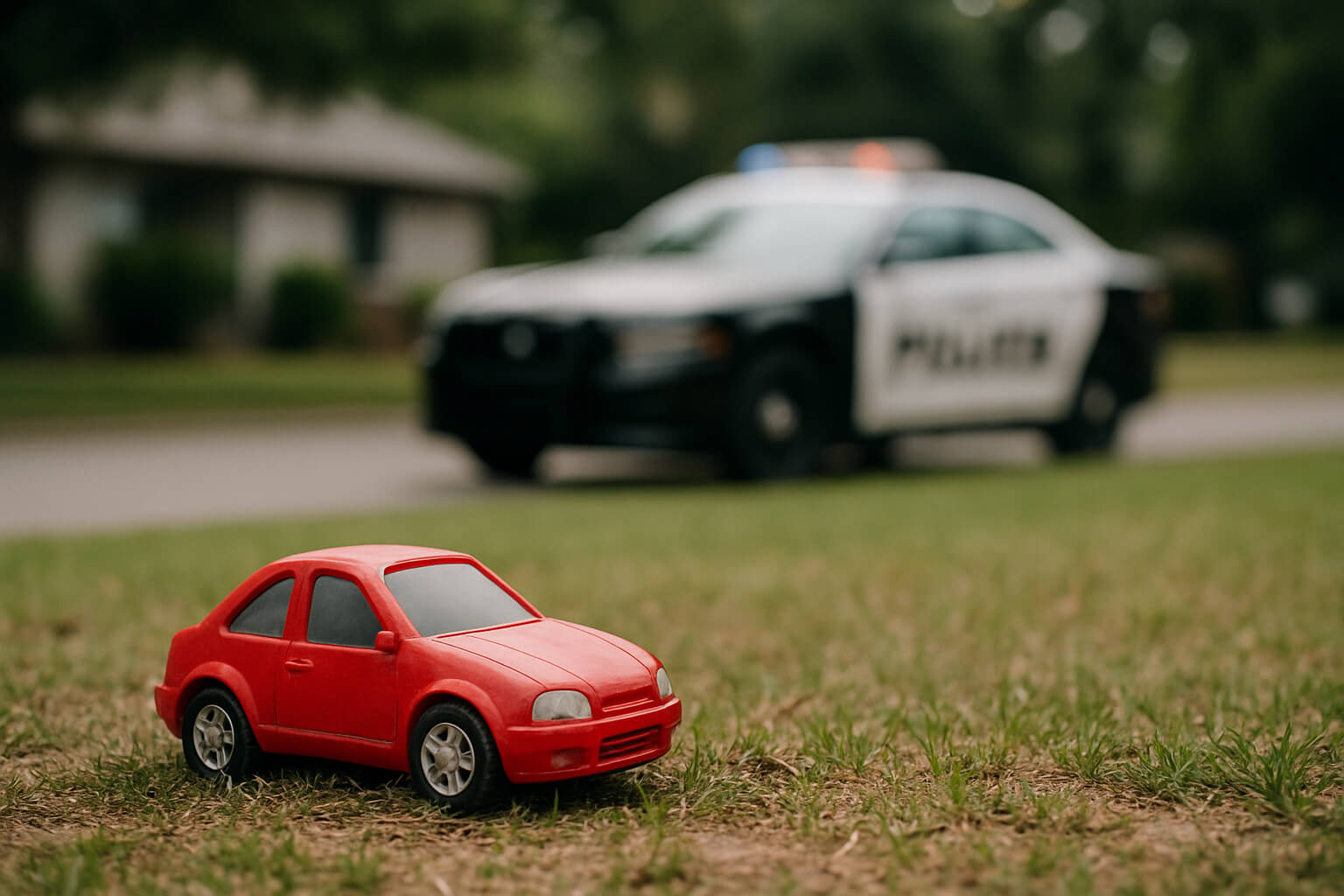
If your dad goes to jail when you’re a kid, you remember it forever. You don’t just remember what happened—you remember how it felt. I remember the window. I was standing there with my brothers, peeking through the blinds in our parents’ bedroom, looking out into the front yard. Red Mitsubishi in the driveway. Cops everywhere. One had a big gun—looked like something out of a war movie.
We didn’t know what was going on. There was no context, no warning, no moment to prepare. One minute we were just kids watching through a window. The next, we saw our dad get yanked out of the car and thrown to the ground. Cuffed. Surrounded. Taken.
I didn’t know he’d robbed anyone. I didn’t know it was a toy gun from our house that he used. I didn’t know what the word “desperate” meant. All I knew was my dad was in trouble, and the people who had the power to help him weren’t helping—they were hauling him away.
I felt scared, angry, confused—like I was supposed to defend him somehow, but I didn’t even know what from. It was just fear. Raw, thick fear that sat in my chest and didn’t leave. You think your dad is unshakable, even when he’s rough around the edges. But when your dad gets arrested right in front of you, your whole world changes. That’s the moment I stopped being a kid, even if no one knew it yet.
I Didn’t Know He’d Robbed a Flower Shop
My dad went to jail for robbing a flower shop — with one of our toy guns.
That sentence still feels strange to say, even decades later. At the time, though, I didn’t know any of that. I just saw cops. Guns. Handcuffs. My dad on the ground.
It wasn’t until they brought the groceries to our door that it all started to make sense. A couple of officers carried the bags from the car—bread, milk, canned food—and explained where it had come from. My dad had used one of our fake guns to hold up a local flower shop. Afterward, he went and bought groceries for the family.
He really did it. That was the moment it hit me: this wasn’t some mix-up or false arrest. It was real. He’d done it. And the food on our table that night was paid for with money stolen by someone I loved.
My mom filled in the rest. She’d had me young, and in a lot of ways, we were more like friends than mother and son. She told me the truth straight. Told me he’d lost his job. That he hadn’t told anyone. That maybe he was trying to do the right thing in the wrong way.
And I believed that. Even then, I believed that. I don’t know what it’s like to have nothing and be out of options, but I understood what it meant to try—and I could see he was trying. It didn’t excuse what he did, but it made me feel something unexpected: admiration.
Twisted as it sounds, I wasn’t angry. I was heartbroken… but I was also proud that, in his own messed up way, my dad was trying to take care of us.
The Moment I Took on Too Much
When my dad was taken away, everything got heavier—and I don’t just mean for my mom.
She suddenly had to handle everything on her own: bills, meals, laundry, a daughter with a disability, and three boys who didn’t yet understand what had just shattered around them. I could see it in her eyes, even if she tried not to let it show. She was drowning.
So I did what a sixth grader probably shouldn’t have had to do. I started helping—more than helping, really. I did dishes. I changed diapers. I fed my sister through a tube in her stomach. I tried to keep the boys in line and out of the way. I didn’t have any idea what I was doing, but I did it anyway.
Because when your dad is in jail, sometimes you feel like you need to become him.
I didn’t decide that consciously. No one told me to step up. I just looked around and saw there was no one else. I wasn’t trying to be heroic. I was just trying to keep things from falling apart. Somewhere in that chaos, my identity shifted. I wasn’t a kid anymore—not really. I had responsibilities now. I had weight on my shoulders that never fully lifted, even after he came home.
Looking back, I think that was the first time I learned what survival mode really feels like. You don’t think. You just act. And in acting, you lose pieces of yourself. Not forever, maybe. But for a long time.
That was the day I stopped seeing myself as a son and started seeing myself as the replacement.
I Said No to a Better Life
After my dad went to jail, my grandparents stepped in with an offer: I could come live with them.
They weren’t trying to take me away forever. I think they genuinely wanted to help. Their home meant clean clothes, steady meals, cable TV, air conditioning. A quiet place to sleep. No tube feedings or screaming toddlers. No worrying if the lights would stay on.
It was everything I didn’t have at home—and everything I thought I wanted.
But when I pictured leaving, something didn’t sit right. My mom was drowning. My sister needed constant care. My brothers were too little to understand what was happening. And me? I wasn’t even a teenager yet, but I already felt like the only steady thing they had left.
So I said no.
Maybe it was pride. Maybe it was guilt. Maybe it was love. Probably a mix of all three. But I couldn’t walk out of that house just because things got hard. And I definitely couldn’t walk out just because I had the chance to be comfortable.
I don’t regret that decision. Even now. It meant everything to me to be there—even if I wasn’t always sure how to help. I did what I could with the hands and heart of a sixth-grade kid. Because love sometimes looks like choosing to suffer with people instead of escaping without them.
I couldn’t leave just because my dad was in jail. They needed me.
And maybe, deep down, I needed them too.
The Moment He Told Me He Was Proud
After my dad got out of jail, I didn’t expect what he said next.
I wasn’t sure what kind of mood he’d be in. Would he be angry? Embarrassed? Quiet? Would he even say anything at all? I had no clue how dads are supposed to act after something like that. I just knew life had been hard while he was gone—and I had done what I could to keep things together.
I cleaned. I helped feed my sister. I tried not to cause problems. I wasn’t perfect, but I tried to carry weight that didn’t belong on a sixth-grader’s shoulders.
And then he came home.
One of the first things he said was that he heard what I’d done… and that he was proud of me.
That caught me off guard. It wasn’t a deep conversation or a long speech. But it hit me. Something about that moment landed deep in my heart. For the first time, maybe I saw responsibility as something sacred—not just survival. It wasn’t about being forced to grow up too soon. It was about showing up for the people you love.
He might’ve gone to jail, but he still saw me. Still noticed what I had carried. And in a time when nothing else felt steady, those words stayed with me.
What It Did to My View of Masculinity
When your dad goes to jail, you redefine what strength looks like.
I didn’t grow up thinking being a man was about being loud or dominant. My first stepdad taught me what it looked like to be feared, not respected. He was aggressive, cruel—and made everything about control. That wasn’t manhood. That was fear in disguise.
So when my 2nd step dad, who I always just considered my real dad, went to jail, and I stepped in to help—without being asked, without yelling, without needing credit—that became my new definition of manhood. It wasn’t about chest-pounding or acting tough. It was about doing what needed to be done, quietly, even when no one saw it.
I wasn’t strong in the way TV shows or movies paint fathers. I didn’t have muscles or booming speeches. I just learned to show up. And I carried that forward into how I treat my wife, my kids, my responsibilities.
I think deep down I rejected every loud, angry version of “being a man” that I’d ever seen growing up. And instead, I started to believe that strength could look like service. Like patience. Like staying when it would’ve been easier to leave.
That moment reshaped how I carry myself. I don’t need to be the loudest man in the room. I just want to be the one who can be counted on when things fall apart.
Did I Admire Him? Maybe.
Even though my dad went to jail, part of me respected what he tried to do.
That might sound strange—but I was just a kid, watching my world fall apart. When I found out he’d robbed a flower shop using one of our toy guns, I didn’t feel anger right away. I felt confused. Then I felt something else: a strange sort of admiration.
Not for the act. It was wrong. Stealing is wrong. And using a toy that belonged to your own kids? That hit weird. But the reason behind it… that got to me. He hadn’t done it out of greed or violence. He did it because we didn’t have groceries. Because we needed something. Because he felt like he had no other choice.
I don’t know what I would’ve done in his shoes. I want to believe I’d find another way. But desperation messes with a man’s head. And I think what stuck with me wasn’t the robbery—it was the motive behind it. He wanted to provide. He wanted to protect. He just didn’t know how.
That left a mark on me. It shaped how I think about sacrifice. Sometimes it’s messy. Sometimes it’s misguided. But the instinct to step in and carry the weight for someone else? That part I understand. That part stayed with me.
What My Mom Taught Me
With my dad in jail, I got to see how strong my mom really was.
She didn’t fall apart. I’m sure she wanted to. She had three little kids and no partner. A disabled daughter to care for. Bills to pay. No roadmap for how to handle it all—but somehow, she kept going.
What surprised me most wasn’t that she stayed strong. It was that she included me in it. She didn’t shut me out or treat me like I was too young to understand. She talked to me like a teammate. She explained what had happened. She let me carry pieces of the load—not because I had to, but because I wanted to.
Looking back, I know now that’s probably not what she wanted for me. No mother wants her sixth grader doing dishes, folding laundry, and helping feed a sibling through a feeding tube. But she didn’t have a choice. And neither did I, really. The world shifted overnight, and we both adjusted.
That time in our lives taught me that survival isn’t loud. It’s quiet, persistent, daily effort. It’s grit wrapped in gentleness. My mom showed me that. I saw strength not in her volume, but in her resolve. In how she kept moving.
That version of strength—steady, humble, honest—stayed with me more than anything else.
Where Was God in All This?
When my dad went to jail, I didn’t understand much about God. I didn’t question Him—I just didn’t really know He was there. But looking back now, I see it differently. I see His fingerprints all over that season. Not in the pain, but in the provisions. In the groceries that showed up anyway. In the way my mom didn’t fall apart. In the fact that I didn’t break under a weight I shouldn’t have been carrying.
I didn’t grow up in a home where faith was always front and center. But something about that time planted seeds—seeds of resilience, seeds of responsibility. And later, when I finally started walking with God, I recognized those seeds for what they were: grace ahead of schedule.
God didn’t prevent the arrest. He didn’t erase the struggle. But He did something better. He started building something in me that I would lean on for the rest of my life. Even now, when I think about what makes a man strong, it’s not fists or volume or control. It’s faith. It’s the quiet kind of strength—the kind I first started learning back then, before I even had the language for it.
The Boy Who Grew Up Overnight
My dad going to jail didn’t just shake our family. It remade me.
I didn’t become a man that week—but I stopped being a boy.
That’s what people don’t always understand. When something big fractures your world, it’s not like you get some new title. There’s no moment where someone says, “Congrats, you’re an adult now.” But something in you gets rewritten. Your priorities shift. Your instincts change. You carry more weight in your chest than you did the week before.
That’s what happened to me.
I still watched cartoons. I still liked candy. But I had a different posture now. I noticed what needed to be done and felt like it was my job to do it. I looked at my siblings differently—not as playmates, but as people I needed to protect. I saw my mom’s eyes and realized I could either make things harder or help hold things together.
It wasn’t noble. It was necessary.
And when I think back on that version of me—barely twelve years old—I don’t feel pity. I feel clarity. That moment, as hard and unfair as it was, built something in me I still carry today. It didn’t just shift my responsibilities. It shaped my resolve.
There were hard moments before this one. But this was the break that didn’t come from pain alone—it came with responsibility, and it started reshaping how I saw myself.
A Free Resource for Men Who Refuse to Quit
If your story sounds anything like mine, you know what it’s like to carry weight from your past. You know how it lingers—quietly shaping how you see yourself, how you show up for your family, how you walk through the world.
That kind of heaviness doesn’t just disappear. But it can be carried differently.
That’s why I created a free devotional called Start Strong: A Daily Reset for Men Who Refuse to Quit. It’s not a pep talk or a to-do list—it’s a focused reset built for guys like us. Men who have been through stuff. Men who want to walk forward, not just think about the past. Men who are still learning how to be consistent, even when the old pain creeps back in.
If your dad went to jail or left a hole in your childhood, this daily reset can help you find consistency and peace.
You don’t need to have it all figured out. You just need a way to begin each day on purpose.
Download the free devotional here.



0 Comments